
The Captain Explains: Making Sense of the Buoys in Plymouth Sound
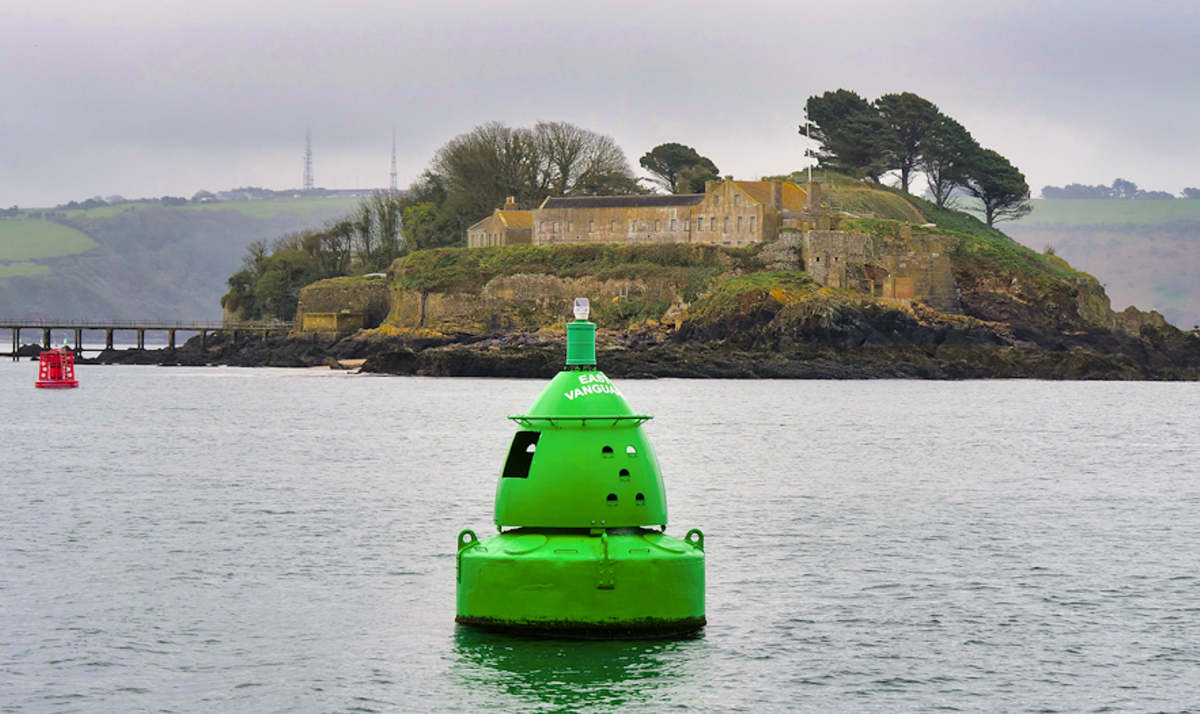
Next time you’re looking out across Plymouth Sound, spare a thought for the mariners navigating their way through all those red, green, black and yellow buoys. They aren’t there for decoration. Each has a very particular job to do.
As I’m sure you know, green is the colour of starboard (the right-hand side of a vessel), while red is port (the left). Port is easy enough to remember – just think of the colour of a decent glass of port.
There are two main systems of buoyage used around the world: Lateral and Cardinal.
The Lateral system was first standardised by the League of Nations in 1936, in an attempt to persuade everyone to use the same colours and shapes of buoys for the same purposes.
Unfortunately, the world’s maritime nations couldn’t agree on which way round the colours should go.
So we ended up with two versions.
In most of the world, including Britain, we use what’s known as IALA Region A.
(The International Association of Lighthouse Authorities, which has kept its acronym but these days is the International Organisation for Marine Aids to Navigation.)
When entering harbour, you keep the green buoys to starboard (your right) and the red ones to port (your left). Logically enough, your starboard navigation light is green too.
This arrangement is particularly useful when entering an unfamiliar harbour. You may be able to get advice before departing, but when arriving somewhere new, you need to know where you’re going.
The Americans, however, do things differently. In IALA Region B, red buoys are kept to starboard when entering harbour. This system is used in the Americas, Japan, the Philippines and South Korea – a collection of countries that looks rather like the American sphere of influence after the Second World War.
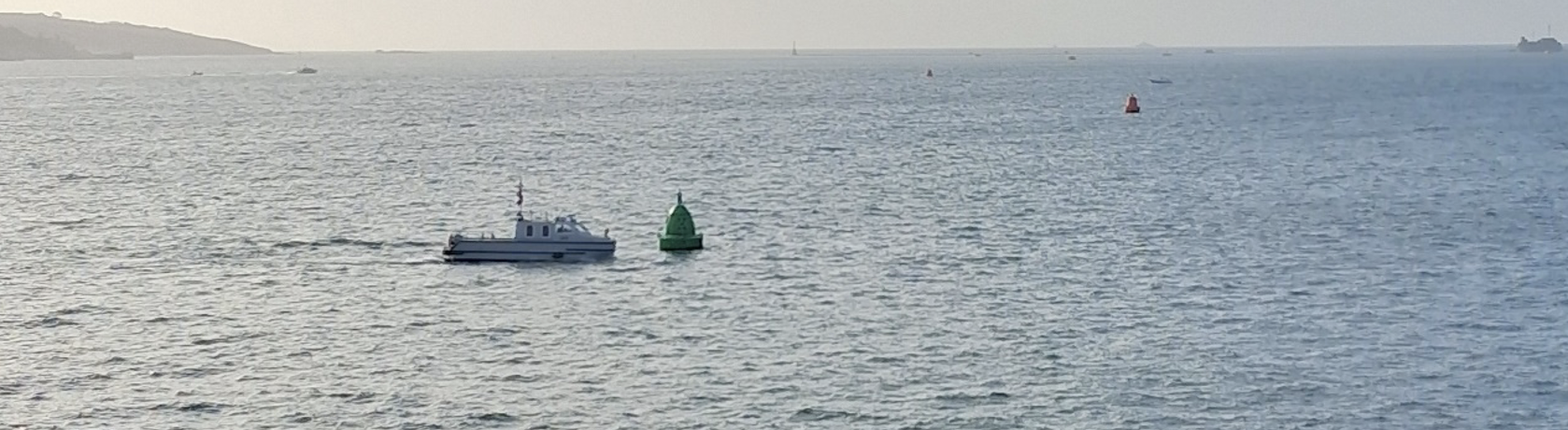
The green buoy in our photograph above is a starboard-hand buoy, marking the right-hand side of the channel into Devonport. Compare it with the survey boat alongside and you’ll get some idea of its considerable size.
But red and green buoys are only half the story.
Enter the Cardinal system
The second system, agreed internationally in 1977, is called Cardinal buoyage.
This is where things become rather clever.
While Lateral buoys mark the sides of a navigable channel, Cardinal buoys tell you which side of a particular mark has safe water, and where the danger is.
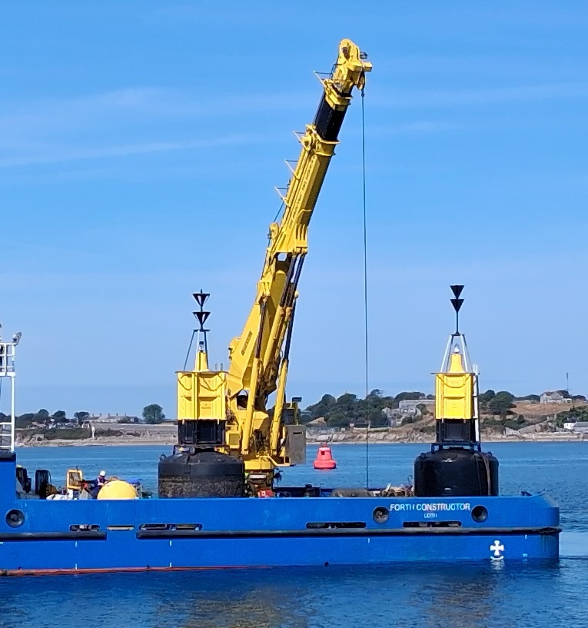
They’re painted black and yellow in four different patterns, with distinctive shapes on top to help you recognise them.
A North Cardinal buoy, for example, tells you that the safe water is to the north of it. In other words, keep north of the buoy to avoid the danger.
And there’s a wonderfully simple way to remember which is which.
Look at the two black cones on top:
- North: Both cones point upwards – towards the north of a chart.
- South: Both cones point downwards.
- West: The cones point towards each other, forming a wine glass.
- East: The cones point away from each other, making an Easter egg.
Once you’ve mastered the wine glass and Easter egg, you’re well on your way to becoming a competent buoy-spotter.
What about the lights?
Of course, buoys must also be recognisable at night.
Lateral buoys display red or green lights, as appropriate, while Cardinal buoys use white lights.
These flash in different patterns to identify the buoy. Mariners call these patterns the light’s characteristics.
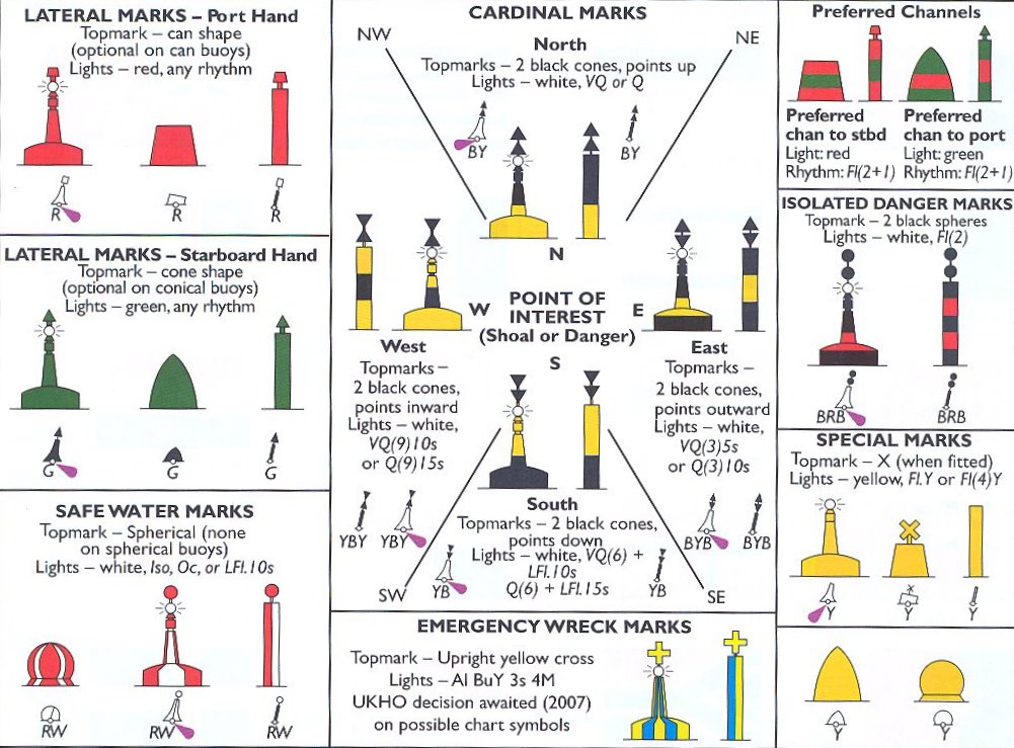
The accompanying IALA diagram shows the various types you might encounter.
Try it yourself
There are more than 25 buoys in Plymouth Sound, outside the Narrows, each helping mariners navigate safely through our busy waters.
So next time you’re aboard the Cawsand Ferry, or one of our other local grockle boats, have a look around.
You should now be able to work out which buoy is which, what it’s telling you, and which side of it you’d be wise to pass.
And if you can remember the difference between a wine glass and an Easter egg, you’ve already mastered one of the more useful lessons in navigation.


Comments ()