
October 9, 2026: INS Trishul, an Indian Krivak III, Dauntless, and a Portuguese submarine

This week a larger than usual number of warships in and through The Sound:
SD Victoria entered port on Saturday last.
HNoMS Otto Sverdrup, a Norwegian frigate, arrived on Sunday, probably for a period of FOST training. She was last here in April this year.
RFA Proteus, the British multi-role surveillance ship, was in and out on Wednesday
INS Trishul, an Indian ‘Krivak III ' general-purpose frigate, arrived early on Thursday morning, probably for a weekend ‘courtesy call’ – what used to be called ‘Showing the Flag’ (more on her in a moment.)
HMS Dauntless, an RN Type 45 air defence destroyer, was briefly anchored in the Sound on Thursday
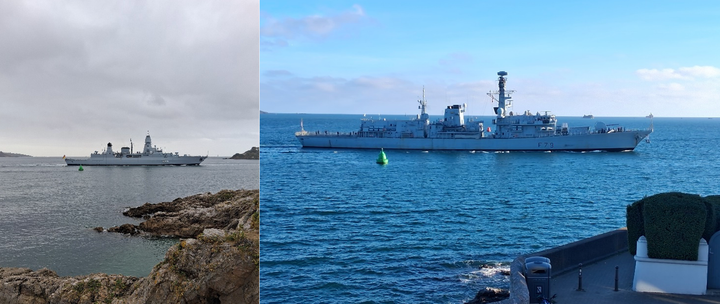
HMS Sutherland, an RN Type 23 frigate, continues here training, as does FGS Hessen, a German air defence frigate (slightly smaller than, but very similar to the RN’s Type 45 air defence destroyer). As I’ve written previously, National nomenclatures for ship types can be confusing and contradictory.
And a Portuguese submarine (probably NRP Tridente) entered Devonport on Thursday afternoon.
Almost like the ‘old days’!
The submarine NRP Tridente was last here for a week about a year ago. It is likely that she will be acting as a target for the other NATO warships training here, but, of course, that won’t be a one-sided training package as Tridente will be trying to sink Sutherland, Otto Sverdrup and Hessen, just as diligently as they will be after her.
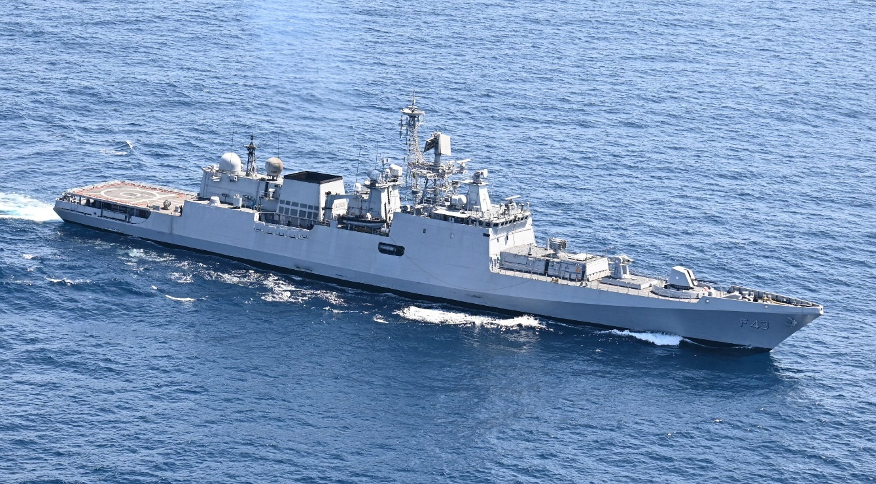
So, this week’s more unusual visitor is the Indian navy’s Trishul. She was built in the Baltic Shipyard in St. Petersburg, Russia, and commissioned into the Indian Navy in 2003. In essence, she is slightly smaller than, but equivalent to, the RN’s Type 23 frigates in their general-purpose version. I called her a ‘Krivak III’ above. This is a NATO designation for a Russian (originally Soviet/Warsaw Pact) warship. All Soviet surface warship classes used to be given a name beginning in K by NATO. The original Krivaks were specialist anti-submarine frigates, with the first one entering service in 1970. There have been several different variants since and the Krivak IIIs were built for the Border Forces of the KGB, on the same platform as the earlier Krivaks, but with a more general-purpose weapon fit and a large flight deck aft for an embarked helicopter.
The Indian versions (the Talwar class) have a mix of mostly Russian weapons systems and sensors, and a few Western ones.
There are currently nine ships in the class, with another under construction. Trishul arrived here from France and will probably visit other European countries. She may even return to her birthplace….
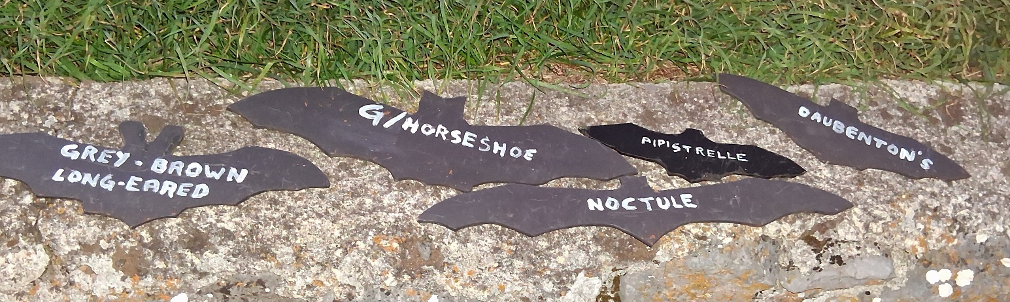
On Wednesday evening the National Marine Park (NMP) Coastal Rangers and the Devon Bat Group organised a Twilight Bat Walk at Devil’s Point. This was a part of the NMP’s regular programme to get the people of Plymouth interested in what is around them and, especially, what is in The Beagle area – on the edges of the Plymouth Sound Marine Park. If you want to know what is planned, either sign up via the NMP website
About 30 people of all ages (at least 7-77) gathered at the Devil’s Point car park where the Devon Bat Group gave a very good introduction to bats generally and the bat types we might see – although wisely (with a fresh breeze blowing) they did warn that the bats might not bother to come out to forage – which they do at sunset.
In the event, the bats did appear, and the group was well entertained for about 30 minutes down by the open area beyond the fortifications. This Autumn, Bat Walks were held at Ernesettle Creek, Kinterbury Creek, Devil's Point, Southway Nature Reserve, Devonport Park, Central Park and Ford Park Cemetery. It is only worth holding them in the Autumn as the nights draw in and the bats are stocking up for their Winter hibernation. Bat Walks will restart in September 2027.
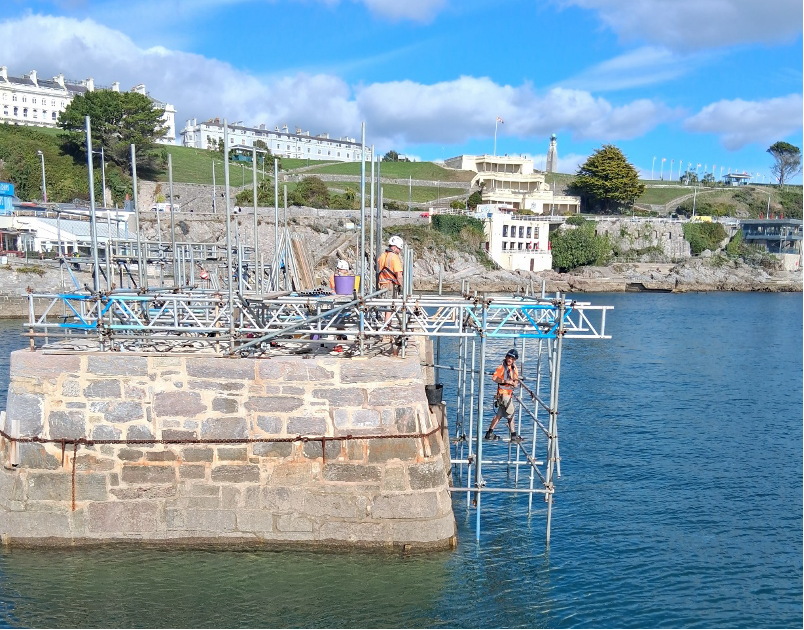
Finally, to West Hoe Harbour. A large area of scaffolding is being built on the western end of the eastern arm to let the stonemasons work on the pier's outer end. It seems they hope to finish the seaward side ‘before the winter’, but this is increasingly unlikely. The stonemasons will finish as much as they can before the weather becomes too dangerous, then remove the scaffolding for the winter. The top of the pier won't be finished this year, and it now looks like the whole rebuild won't be finished until late Spring/early Summer 2027.
Comments ()