
Mysterious stickers leave some residents spooked. What next for Sutton Harbour? Are you feeling Arty for October? Could there be a new 'Lenkiewicz' trail on the waterfront? And more about 'hooters'!

It's The Beagle: Friday October 2, 2026
It's a stick up
Dozens of stickers have appeared on waterfront lampposts and pillars, prompting concern. They feature an "emoji" face with bloodshot eyes, exhaling smoke or vape.
Worryingly, they also include a QR code - a link to a website that can be scanned from a mobile phone.
Similar web links in the past have been linked to 'phishing' attacks for personal data, to malicious sites containing malware, or just as a way of connecting to drug dealers.
The Beagle tested one of the QR codes, and for now it seemed to be none of the above - it didn't connect to any site at all.
The advice from police and Neighbourhood Watch is to ignore the stickers and to remove them if possible.
Waterfront businesses vote on five-year plan — including new Lenkiewicz trail

A new trail celebrating the work of Plymouth artist Robert Lenkiewicz is among plans being put to more than 500 waterfront businesses as they decide whether to fund the city’s Waterfront Business Improvement District for another five years.
Businesses have until October 15 to vote on the proposals, which would see the Waterfront BID continue from April 2027 until March 2032.
The BID says £4.5 million of levy-payers’ money has been invested around Plymouth’s waterfront since it was established in 2012.
Under the new proposals, eligible businesses would pay an annual levy equivalent to 1.9 per cent of their property’s rateable value. Currently, 533 premises are liable for the levy.
In return, the BID is proposing up to 50 projects and initiatives during its fourth five-year term.
One likely to catch the eye of waterfront residents is a new Lenkiewicz trail, celebrating one of the artist's most closely associated with Plymouth and particularly the Barbican.
The proposal follows the popularity of other public-art trails around the waterfront, including the recently launched Beryl Cook trail and the Guiding Lights lighthouses for St Luke's.
Other proposals include new waterfront events, with an Elizabethan Christmas Weekend, carnival, and jazz and blues events among the ideas, alongside efforts to attract more cruise passengers, conferences, and group tours.
There are also plans for new National Marine Park signage, improved waterfront maps, expansion of Plymouth’s digital trails app, and better promotion of transport links between different waterfront destinations.
The BID also wants to revive the Waterfront Awards, introduce a “Work from the Waterfront” campaign and undertake further work on cleanliness, safety and antisocial behaviour.
The vote matters because, if businesses approve the proposals, paying the levy will not be optional.
For the BID to continue, more than half of participating businesses must vote Yes, and those Yes votes must also represent more than half the total rateable value of votes cast. If both tests are passed, the levy becomes compulsory for every eligible business within the BID area, whether it voted for the proposal, voted against it, or did not vote.
The ballot closes at 5 pm on October 15, with the result due to be announced on October 19.
Meanwhile what next for Sutton Harbour as the owner begins selling assets?
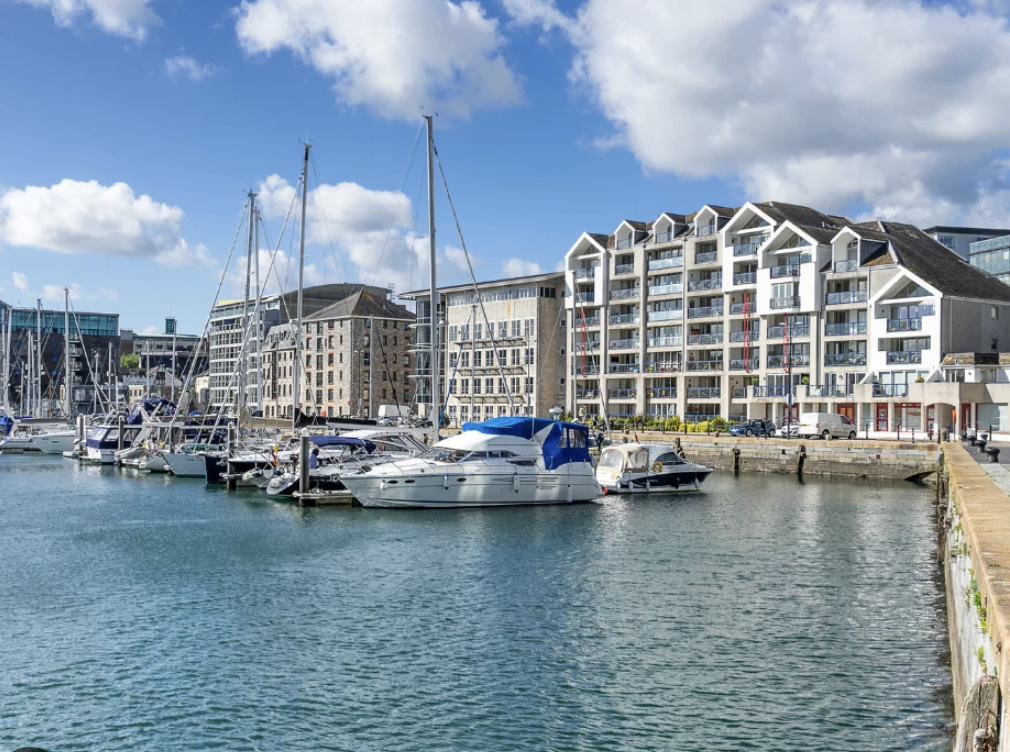
The company which owns and operates much of Plymouth’s historic Sutton Harbour has begun selling off “material portions” of its assets as it seeks to reduce millions of pounds of debt.
Sutton Harbour Group left London’s AIM stock market this week after shareholders backed plans to take the company private.
But the move raises a big question for Plymouth: what could be sold next?
The group owns and operates Sutton Harbour itself, Sutton Harbour Marina and Plymouth Fisheries, as well as King Point Marina in Millbay, car parks and a portfolio of waterfront property.
Its property portfolio was independently valued at £ 45.72 million in March. By the end of July, the group had net debts of just over £ 26 million.
Several properties have already been sold, including North Quay House for £ 1.25 million. By August, completed property disposals had raised £4.735 million and helped reduce senior bank borrowing to £14.913 million.
But Sutton Harbour Group has made clear that considerably more could follow.
Following a strategic review, directors said they had begun an “orderly disposal of material portions” of the group’s assets, ultimately intending to return net proceeds to shareholders after paying debts.
Its bank facility expires at the end of December, with the company intending to seek a smaller replacement facility. Previous company accounts had already revealed that King Point Marina was being prepared for sale as part of efforts to reduce borrowing.
Could either marina be sold? What is the long-term future of Plymouth Fisheries? Which waterfront properties and development sites are being considered for disposal? And what happens to major regeneration proposals including Sugar Quay and Harbour Arch Quay?
The Beagle has asked Sutton Harbour Group to clarify which of its Plymouth assets it regards as core to its future — and which could now be sold.
Scene on the Sound
Beagle maritime correspondent The Captain keeps his eyes on the horizon
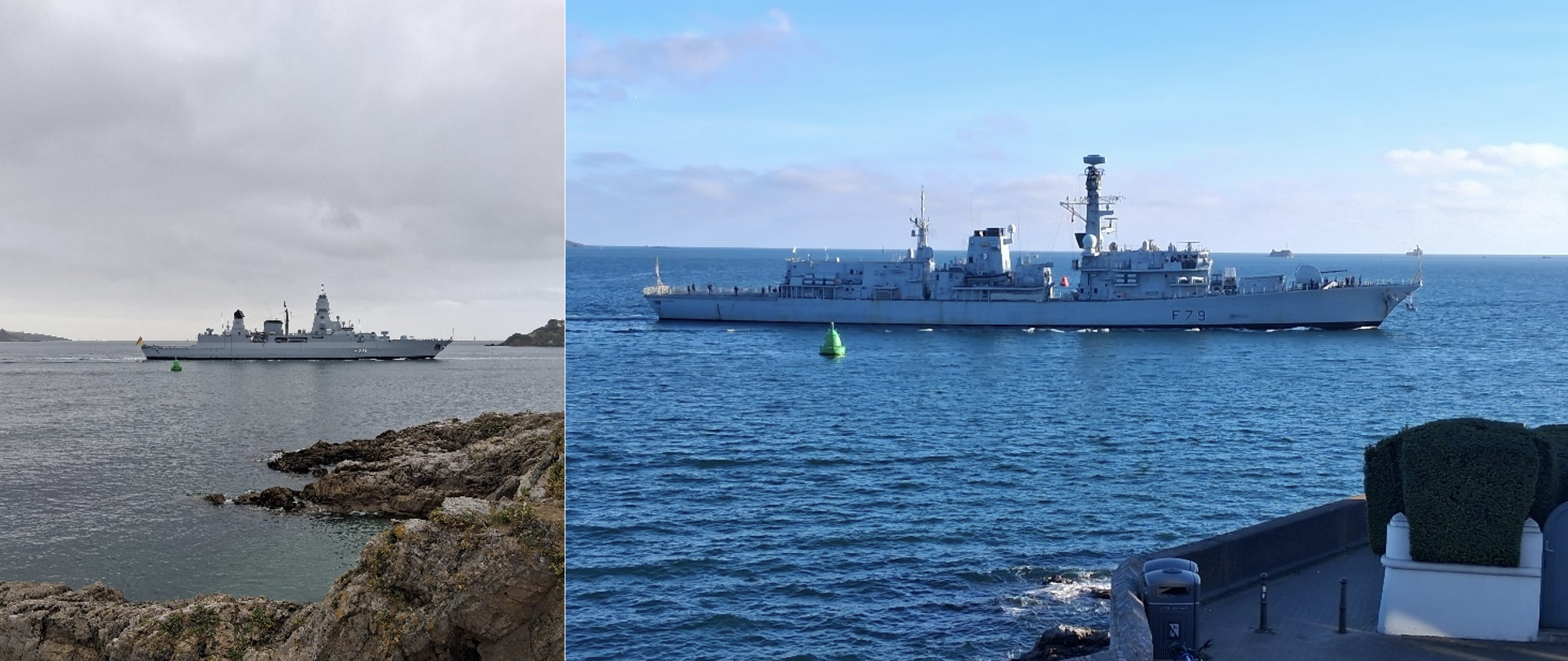
The German Frigate, FGS Hessen, has had the training areas to herself this week. After a couple of weeks here, HMS Dauntless sailed on Monday, and her Automated Identification System has been turned off since. This is quite normal for warships, as they do not wish to advertise where they are going and nor are they required to – unlike merchant vessels, which are supposed to have their AIS on at all times.
On 21st September, about 150 miles off NW Scotland, there was an RN/USN SINKEX. A SINKEX is an exercise conducted very occasionally (they are very expensive to arrange and conduct), where a decommissioned warship will be used as a target for live weapons. In this case, in Exercise Atlantic Thunder 26, the decommissioned frigate USS Klakring was the target.
After de-storing and de-ammunitioning, she will have been thoroughly cleaned to remove all fuel, lubricants, hydraulic fluid, etc., so there will be no pollution when she sinks. Then her hulk will be thoroughly rigged with cameras and other equipment so that the effects of the various items of ammunition can be assessed. Of course, the sea area around, above, and below has to be checked to ensure the firings can be conducted safely too.
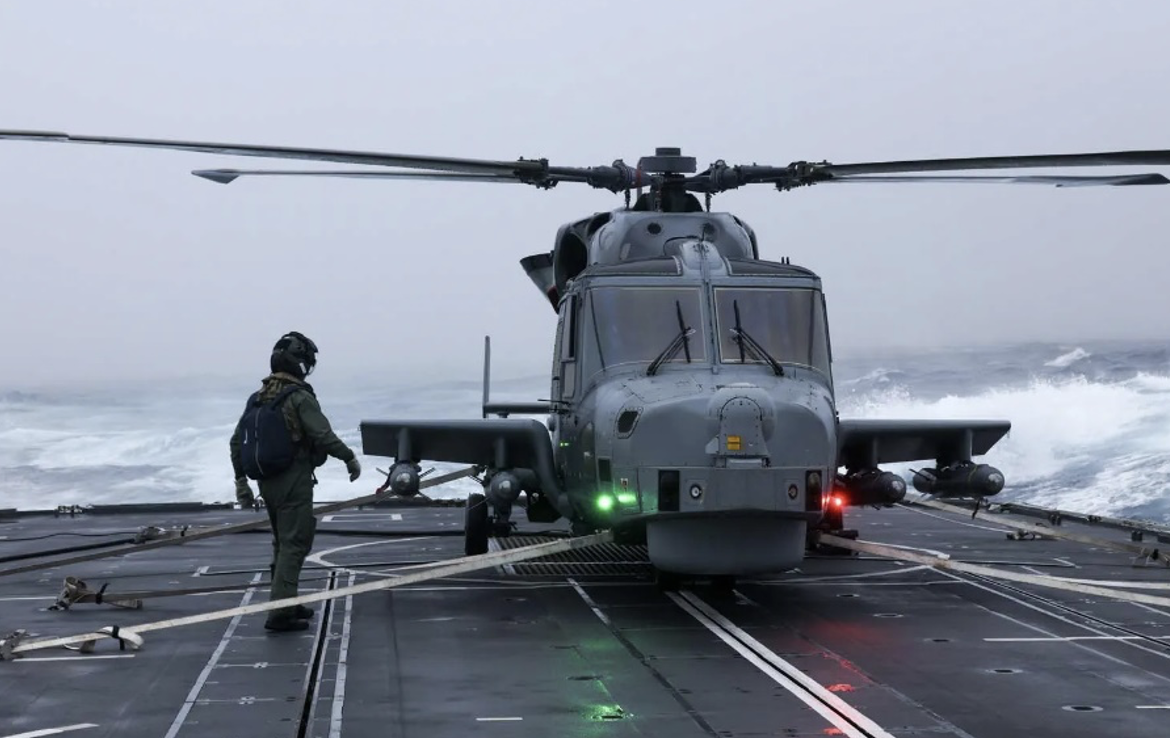
The order of firing needs to be carefully thought through – if the first weapon actually sinks the target, then no other ships get to fire. In this case, the USS Paul Ignatius fired one of her Standard Mk 6 (SM6) missiles at ‘maximum’ range – not disclosed, but around 250 miles. This missile will have been on a ballistic flight path (i.e. a kind of parabola) and so will have dived steeply onto the target, making it very difficult to shoot down. Second off the mark was HMS Portland with her Norwegian-made Naval Strike Missile (the NSM). Once again, the range was not declared, but the NSM has a range of over 100 miles. Again, this would have provided any target with a very difficult defence problem, as the NSM is a sea skimmer in its final approach. Portland’s firing was the first time the RN had fired NSM at another warship target. The third hit came from HMS Portland’s Wildcat helicopter, which fired a Sea Venom missile. Sea Venom has a range of justover 10miles, and it is understood that this firing has qualified the Sea Venom as a fully operational missile system.
The battered ex-Klakring was then bombed by USAF F-15E Strike Eagles from RAF Lakenheath and the coup de grace was delivered by the USN’s nuclear submarine, USS Massachusetts, firing an M48 torpedo.
One objective of this kind of exercise is to assess weapon performance in actual service. The weapons used are deliberately not fine-tuned, but are chosen from one of those already onboard the ship or aircraft. The Services always need to know whether their arsenal is fully effective, and using a weapon that is ‘just like every other one in service’ provides some assurance about the serviceability of the rest.
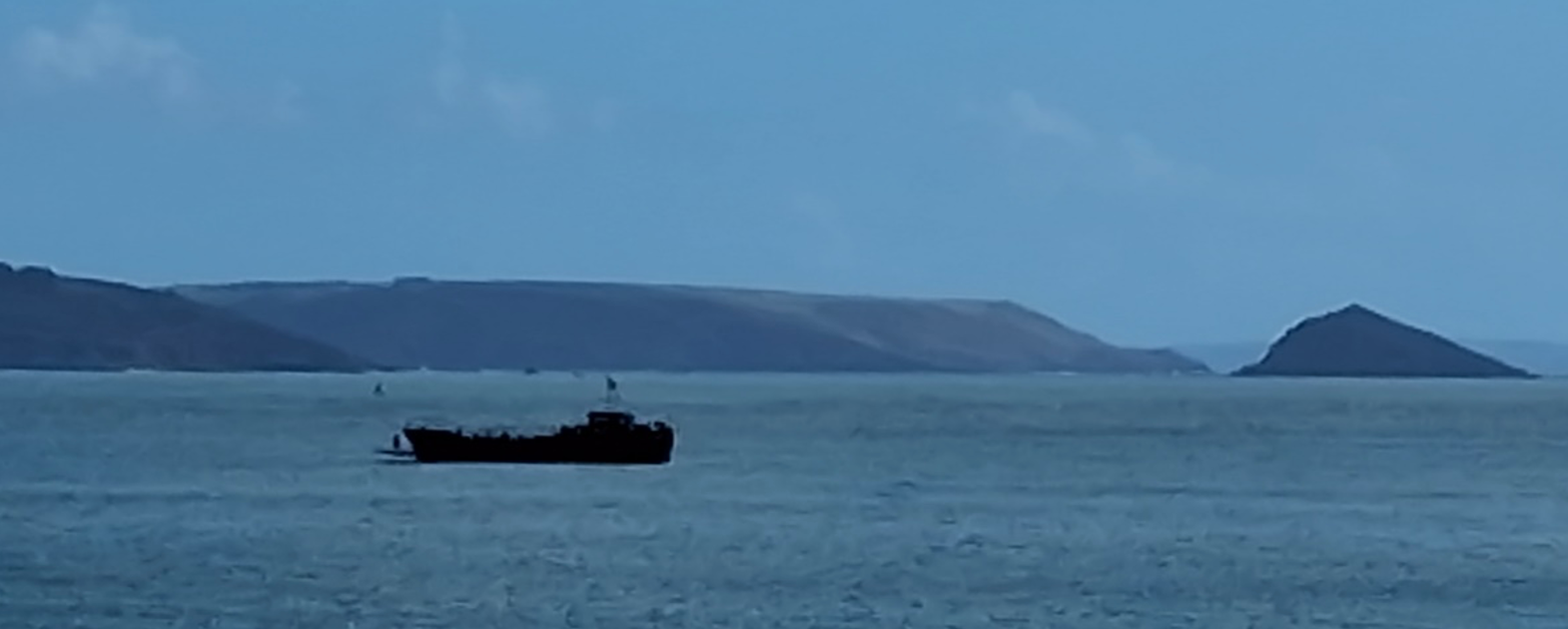
Meanwhile, closer to home, our ‘resident’ superyacht, the Aviva, is now in Gibraltar and the Brazilian Navy has been exercising a Tank Landing Craft (LCT) in Cawsand Bay. The eagle-eyed will have noticed that the LCT was flying a White Ensign, but it is almost certain that she is about to be transferred to, and is already paid for by, the Brazilian Navy
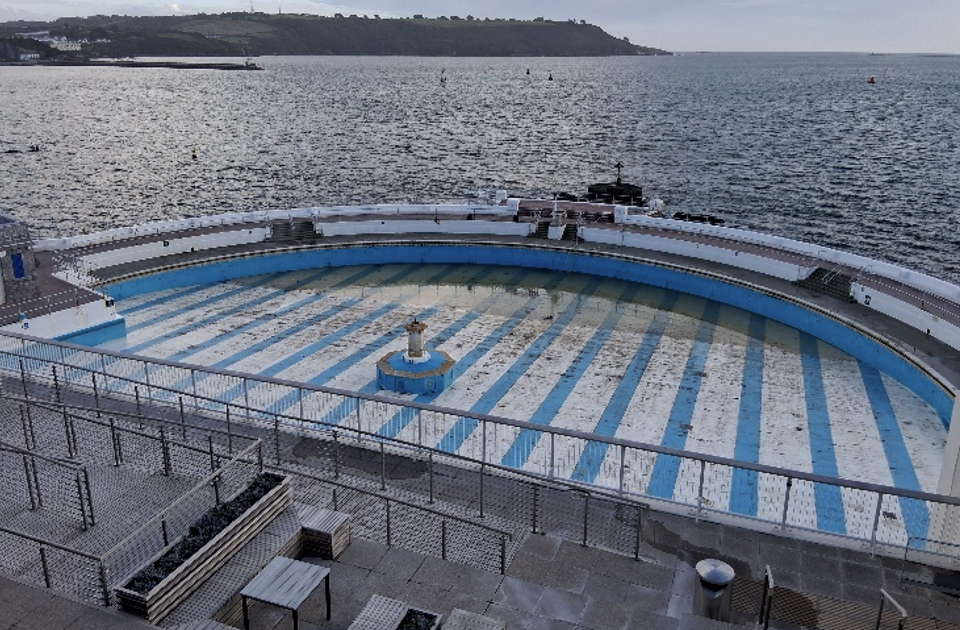
Finally, the Lido is now closed for the winter - and is already looking neglected.
Royal William Yard turns to art for October

Royal William Yard is swapping books for brushes as it launches a month-long celebration of contemporary art.
Following September’s first Read Write Yap literary festival, the Yard is hosting Artober, bringing exhibitions, workshops, live painting and an affordable art market to the waterfront throughout October.
Now in its third year, Artober will feature work by established and emerging artists, alongside opportunities for visitors to get involved themselves.
Highlights include the Artober Exhibition, a Paint Out encouraging artists to capture the Yard and surrounding waterfront, and events forming part of Plymouth Art Weekender.
There will also be workshops and a community exhibition linked to Homelessness Action Week.
Organisers say the programme aims to make art accessible while showcasing Plymouth’s growing creative community.
Sounds from 'The Sound' in the fog
By The Captain
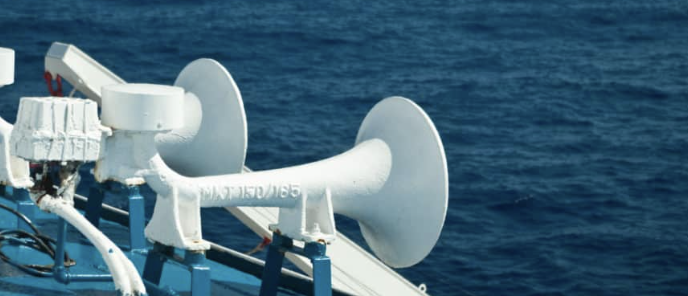
As autumn draws in, we are going to get more misty mornings, and even the occasional day of fog. But first – what is ‘fog’ and what is ‘mist’. It will not surprise you to know that there are exact legal definitions, laid down by the International Maritime Organisation, of both these sorts of ‘reduced visibility’.
'Fog' means that the visibility is less than 1000 metres and mist means that the visibility is reduced, but is more than 1000 metres. ‘Reduced visibility’ means exactly that – either mist or fog.
So – in reduced visibility, ships (and boats) are required to make sound signals, but these are very different from the sound signals (the short blasts – one, two three or five plus) I wrote about on Friday 18th September.
One important factor that I failed to mention then, is that these ‘short blasts’ are only for use by vessels that are ‘in sight of one another’. In other words, they are not for use in reduced visibility.
The Rules of the Road (formally, the International Regulations for Preventing Collisions at Sea (aka the ColRegs)) are a subject on which ships’ bridge watchkeepers will be regularly examined and have to pass at a very high level (95-100%).
So, in reduced visibility, you may hear the following from the Sound:
- A prolonged blast (4-6 seconds) at intervals of not more than 2 minutes. This means that there is a power-driven vessel under way and making way through the water. (Note – another very specific qualification – ‘under way’ means not at anchor, connected to a buoy, alongside a jetty or aground – it does not mean moving – that is ‘making way’). To help remember this, there is the mnemonic “Here I come sounding one”.
- The other sound signal you may hear from the Sound is two prolonged blasts at intervals of not more than two minutes with a two second gap between blasts. This is the signal made by a power-driven vessel under way, but not making way. The mnemonic is “I’m waiting too long”.
By far the most common signal will be the one long blast every two minutes.
There are also sound signals for vessels that cannot, without great difficulty, get out of the way of other vessels. You are not likely to hear these within the Sound. This category includes vessels that are:
‘not under command’ – so perhaps, no power or no steering
‘restricted in their ability to manoeuvre’ – for example, launching or recovering a helicopter (there are several other categories)
‘constrained by their draught’ - a deep draught ship in a channel, that will run aground if it leaves the channel
‘towing or pushing’ – a tug
‘fishing’ – perhaps with nets in the water
‘sailing’ – dependant exclusively on the wind. No prudent sailor would be ‘sailing’ in fog without his (or her) engine turning over and ready for use - which means they are not ‘sailing’ under the ColRegs. If the boat has no engine or a defective one, only then can she claim to be ‘sailing’.
As is probably clear, the ColRegs are full (awash!) with very specific rules and equally specific definitions. Once, I taught potential bridge watchkeepers at the University of Plymouth. Once the ColRegs were taught, which took several sessions, they had weekly half-hourly tests and refresher sessions throughout the two years of their degree course. If this seems excessive, some parts of the written/online MCA (Maritime and Coastguard Agency) exams require a 90% pass mark (and this is for the more obscure parts of the ColRegs). In the MCA orals, there is “Zero tolerance: A single major error, an immediate danger to the vessel, or an incorrectly applied steering and sailing rule will result in an automatic, instant fail."
Advertisement:


Comments ()