
Meet 'The Pioneer' - the unmanned sea vessel setting the pace for European marine innovation, from Turnchapel!
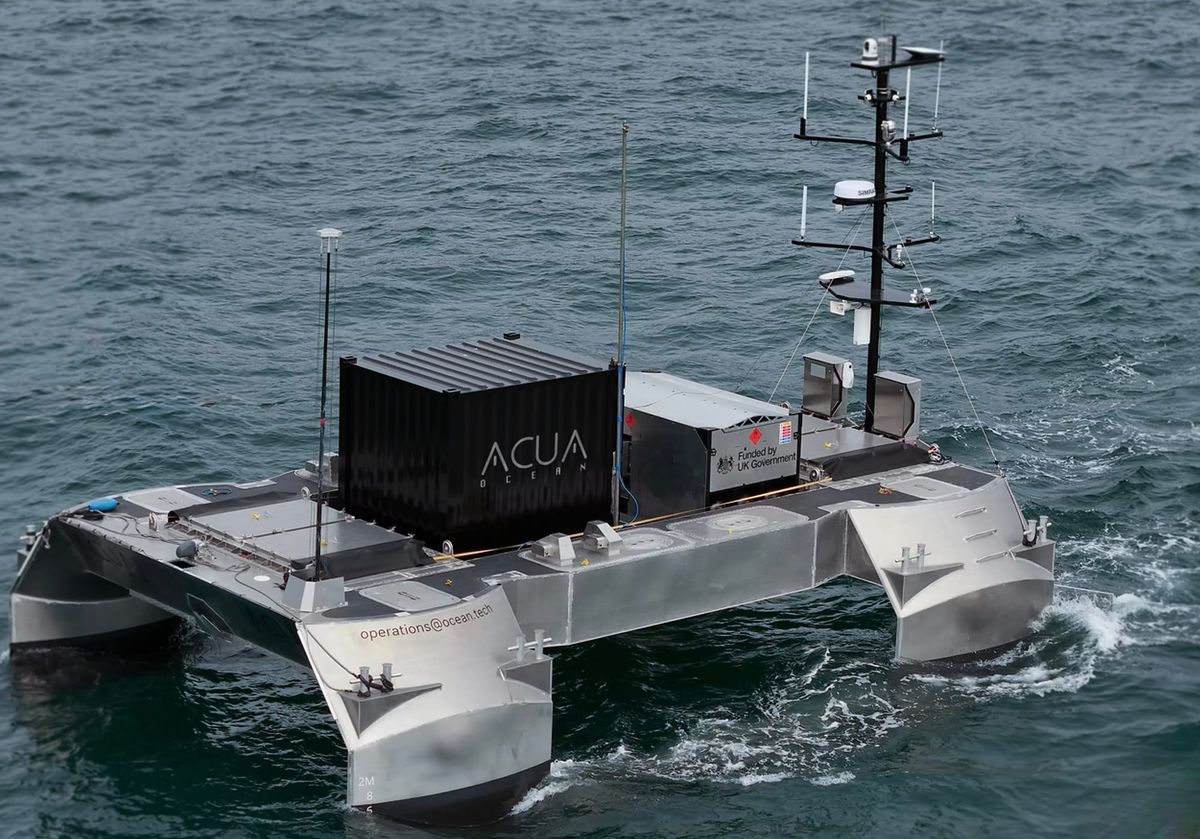

Plymouth has established itself as one of Europe's leading centres for unmanned surface vessel (USV) innovation, combining world-class marine research, naval expertise, advanced marine technology companies and a designated proving environment in and around Plymouth Sound.
Last month, one of the leaders in the sector, ACUA Ocean, launched and recovered its own drone off the deck of a USV - without a single crew member aboard either vehicle.
It was a joint demonstration for the UK Ministry of Defence by the Turnchapel-based company with the American sensor maker Teledyne FLIR Defense, and paired ACUA Ocean's uncrewed surface vessel, Pioneer with a drone known as the SkyRanger R70 aircraft.
Flagship projects such as 'Smart Sound Plymouth' the National Centre for Coastal Autonomy, and high-profile autonomous vessel trials have made the city a recognised testbed for developing, regulating and commercialising maritime autonomy in recent months.
In a Beagle special report, our maritime correspondent The Captain has been to the ACUA Ocean's HQ to view the Pioneer.
A Scene on the Sound special - by The Captain
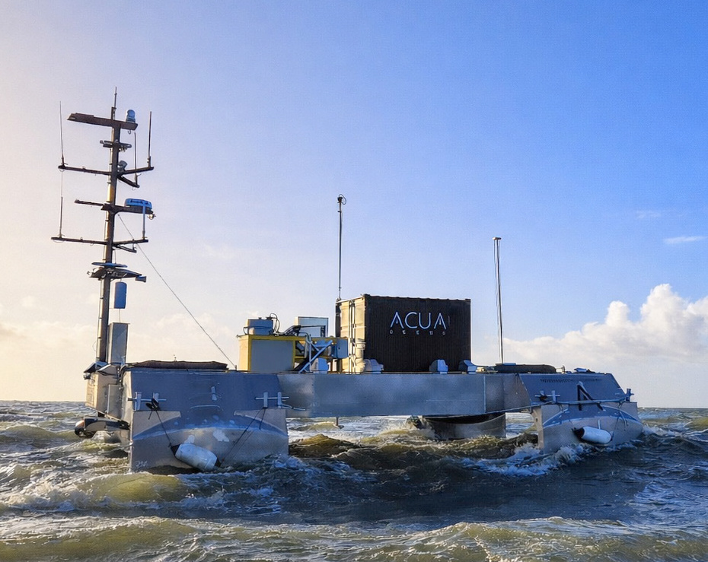
I've been looking into USVs and was lucky enough to visit ACUA Ocean’s base at Turnchapel to see Pioneer – their present trials platform. Work has already begun in the Isle of Wight on building Pioneer 2.
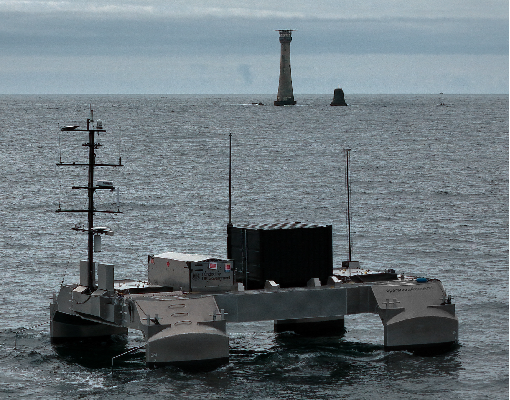
The first impression of Pioneer close up is how simple her construction is – she is made of simple but substantial aluminium plate and is clearly designed to be very robust.
However, apart from the hull, nothing else onboard can be described as ‘basic’.
As can be imagined, safety is of the utmost importance when pioneering new technology and so almost all the systems onboard are duplicated port to starboard or forward to aft.
The 10-foot container seen in the picture above contains a diesel generator. The forward cross beam has a bow thruster on each side and the after one has an electric motor in each. The central section of each cross beam is full of racks of electronic control systems, processors etc etc.
The mast at the stern (left in the photo above) carries a pair of CCTV cameras, including low-light and infra-red, plus navigation lights, radar, a radar reflector, a Skylink terminal, a weather station and several communications antennae. The forward mast can be used to raise any navigation marks that may be required by the International Rules for the Prevention of Collisions at Sea (also known as the ColRegs – but that’s an article in its own right)!
Inevitably the ‘Rules’ have not yet caught up with the operation of USVs, and as Pioneer is a Maritime & Coastguard Agency-certificated workboat (MCA), she must be equipped and ‘manned’ as for any other seagoing vessel. This means that the Pioneer ‘Captain’ , who sits in the Remote Operating Centre (ROC) in Turnchapel, has to be a qualified merchant ship Master and, as Pioneer doesn’t have a full Electronic Chart Display and Information System, the ROC is equipped with all the local paper charts, which are kept up to date.
Pioneer does have an anchor, but it would only be used in the event of a total systems failure and, anyway, there is no winch to recover it. After a lengthy bureaucratic to-and-fro, the MCA did eventually agree that the unmanned Pioneer does not need to carry a liferaft!
Pioneer is designed as a platform for others to use. Aft of the ISO container there is a moon-pool, which in simple terms is a hole in the deck, through which equipment can be dropped or lowered and recovered into the sea. Another ten-foot ISO container can be bolted on above the moon pool to allow above-water trials to be conducted.
In the picture above, the trials equipment can be seen aft of the black ISO container. When I visited, a winch with a few hundred metres of cable and a sensor body on the end was being fitted. Pioneer has already been used in 3D bottom surveys and to trail electronic intercept equipment (that is a kind of electronic ‘vacuum cleaner’ that listens to everything being broadcast from radar to mobile phones).
Pioneer is not the only USV operating in and around the Sound, and I would welcome good photos of others that readers may see - I will endeavour to find out what they are and what they can do. Please email to me at: contactthebeagle@gmail.com.
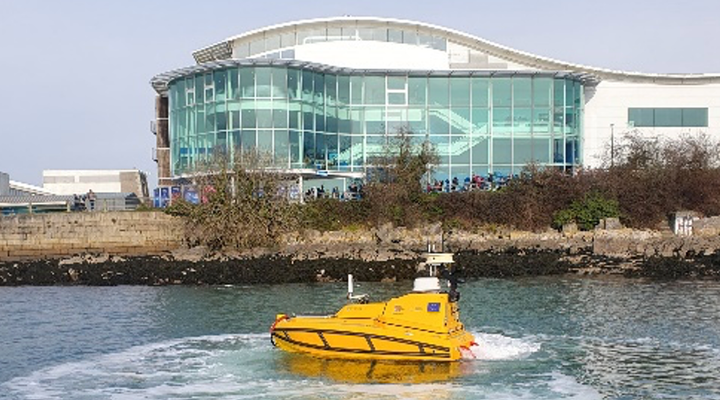
The University of Plymouth has several USVs – all significantly smaller than Pioneer – and I'll have more on these next week.
The Royal Navy’s local USVs will be a harder nut to crack!
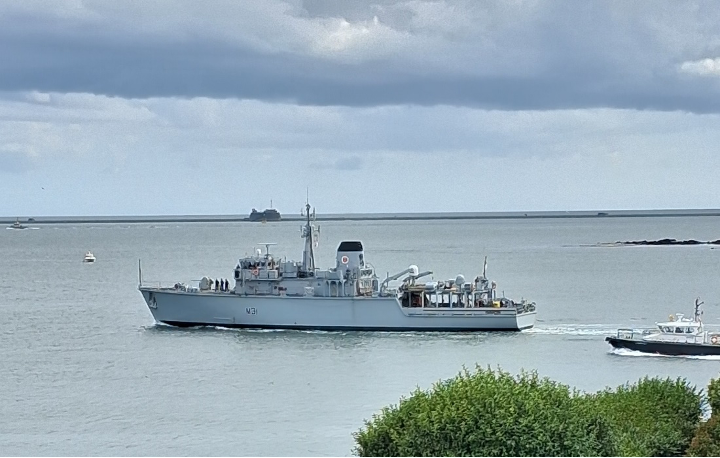
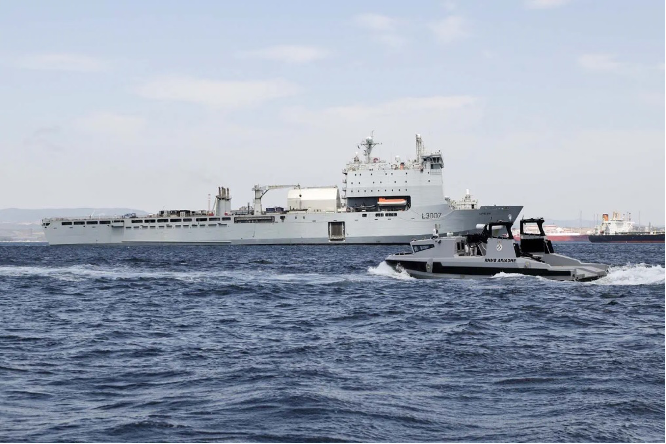
HMS Cattistock (above) is one of the Hunt-class, and they are already being replaced by USVs of the type seen below. A number of these USVs are deployed with RFA Lyme Bay as a mothership, ready to help clear the Strait of Hormuz when/if lasting peace breaks out.
Next week I will explain the difference between minesweepers and minehunters – inevitably bundled together as Mine Counter-Measures Vessels (MCMVs!)
And don’t forget that the Devonport Naval Heritage Centre is open tomorrow – Saturday August 8, from 1000-1500 – see https://devonportnhc.wordpress.com/ for more details.
Comments ()