
HMS Queen Elizabeth visits Plymouth. HMS Bulwark departs for Brazil. "Slave trader" signs might return; And meeting Oshen - another of Plymouth's ocean innovators.
It's The Beagle: Saturday September 12, 2026
Scene on the Sound, by The Captain
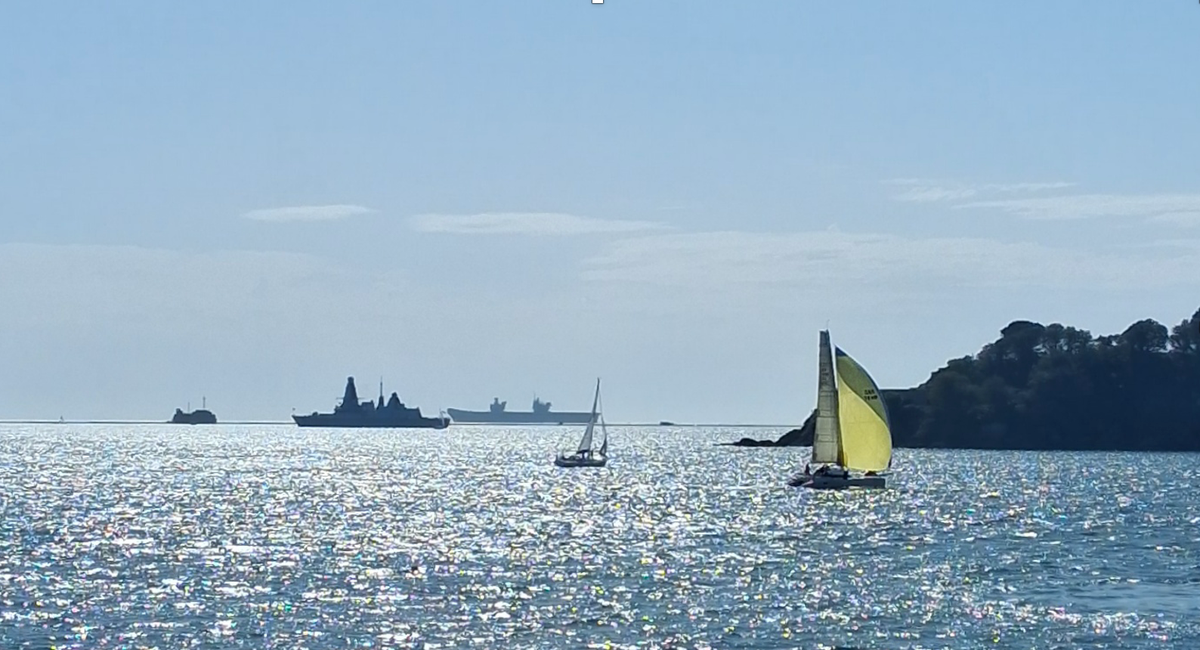
A noticeably busy week on and around the Sound. Last Sunday, we had HMS Queen Elizabeth outside the breakwater – so about two miles away in the photo. She had left Portsmouth the day before and was anchored SOBW for about 6 hours.
My guess was she was embarking some FOST Staff for a couple of training sessions and was heading out from here to embark her aircraft. It certainly looked as if there were no aircraft embarked when she was at anchor here. Her helicopters will come from RNAS Culdrose, on the Lizard and her F-35s from RAF Marham, in Norfolk. She is planned to be away for the next three months, a deployment that will probably include exercises off northern Norway, so attracting the attention of the Russians.
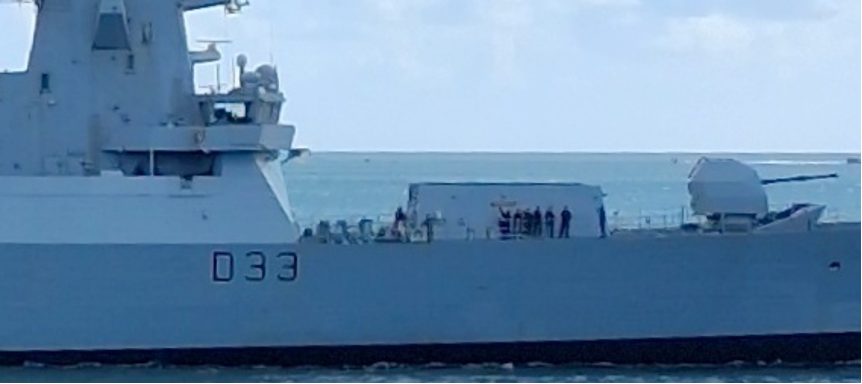
You can also see the silhouette of HMS Dauntless. She has been around since then and is clearly undergoing one of the FOST Training Packages. Some press reports say that Dauntless has already been fitted with the Navy’s new surface-to-surface and land-attack missile – the NSM (Naval Strike Missile), and it looks in the photo below as if the racks for the missiles are there, but no missiles are yet being carried.
The other naval movements this week have been by the Dutch amphibious ship HNLMS Johan de Witt, still training with FOST, two RN frigates, HMShips Portland and Sutherland, the minehunter HMS Brocklesby and the two training and patrol boats – HMShips Blazer and Express.
To complete the British naval movements, RFA Proteus (the seabed surveillance ship), the fleet tanker, RFA Tidespring and the MoD’s Ro-Ro cargo ship FSL Eddystone have passed through the Sound, either inwards, outwards or both.
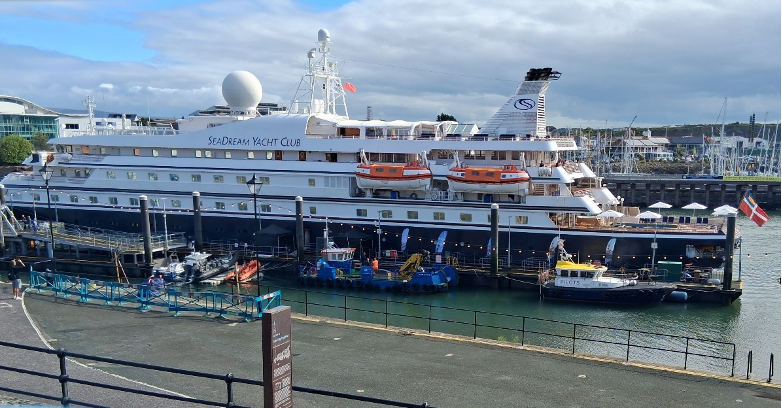
As well as the significant number of naval movements this week (unusual, but very welcome), Plymouth welcomed two cruise ships this week. The first on Wednesday was the Sea Dream II. She is described as a yacht, rather than a cruise ship, and carries only 112 passengers in 56 suites and staterooms. She is the upper end of the cruise market and would cost you between £750 and £1350 per head per night. Sea Dream II was small enough (105m/344ft long) to berth alongside in the Barbican, allowing her guests to get ashore without the hassle of tenders.
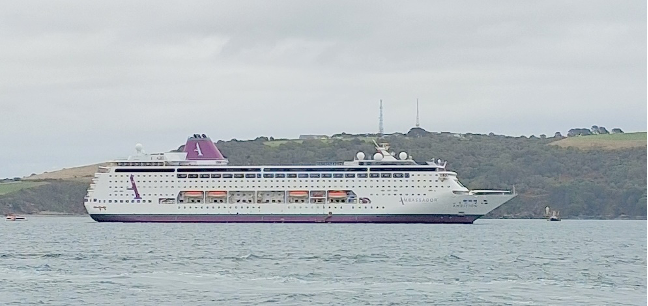
The other cruise ship was the MV Ambition. Like her two sisters under the Ambassador flag, MV Ambition is aimed at the British, no-fly over-50 market. She is over ten times the size of Sea Dream II (48200 tons displacement vs 4333 tons) and carries 1200 passengers in 680 cabins. A cruise on board her will cost you between £75 and £125 per night.
Contact the Captain: email: editor@thebeagle.news
Enforcement action promised if site owners don't do something soon!
Plymouth Council is threatening enforcement action over the state of the former Register Office site in Lockyer Street if the owners don't clean it of rotting food and rats.

As first reported in The Beagle, the site has deteriorated and become a haven for drug abuse since it was supposedly fenced off.
Plymouth City Council has now said: “We are aware of the poor state of the land around the former register office and a number of council teams have been contacted in response to complaints.
“This building is no longer owned by the council, and it is the responsibility of the landowner to ensure that the site is secure. We have been in touch with them to remind them of this; specifically, our environmental health officers have instructed them to secure the site and remove elements that would attract rats.
“Our planning enforcement team has also been made aware and is registering an enforcement case to investigate.”
The Beagle is watching
Call for "slave trader" signs to be reinstated.
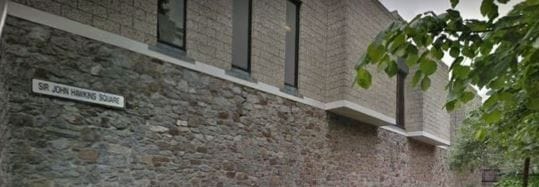
Sir John Hawkins Square street signs were removed in 2020 by Plymouth City Council, following the Black Lives Matter protests. Now there is a call for the signs - named after Britain’s first slave trader - to be restored.
Waterfront councillor Andy Rose is calling for the council to take immediate steps to replace the three street name signs that bore Hawkins' name, saying they are part of the city’s history.
Hawkins was an English naval commander born in Plymouth in the 16th century.
He pioneered and was an early promoter of English involvement in the Atlantic slave trade and is considered to be the first English merchant to profit from selling enslaved people from Africa. An information board was installed in the square by the city council after the street signs were removed to tell people about Hawkins’ role in the slave trade. Hawkins’ cousin was Sir Francis Drake - both men were also key figures in the defeat of the Spanish Armada in 1588.
National Marine Park begins restoration of historic Garden Battery

Work is underway to restore the historic Garden Battery at Mount Edgcumbe, marking a major step in bringing the site back to life as part of the Horizon programme, supported by funding from The National Lottery Heritage Fund and Plymouth City Council.
This restoration forms part of Plymouth Sound National Marine Park's commitment to transforming how people connect with the area's rich maritime heritage. The project will revitalise a well-known landmark on the Rame Peninsula and along Plymouth Sound's waterfront.
Once complete, the restoration will give visitors the opportunity to explore an important piece of the region's maritime heritage. The granite casemated battery was completed by 1862, following recommendations made by the Royal Commission on the Defence of the United Kingdom in 1860. Built on the site of an earlier saluting battery, it originally housed up to six guns designed to defend the mouth of the Hamoaze and the approaches to Plymouth Sound.
Investigating Oshen - another of Plymouth's USVs
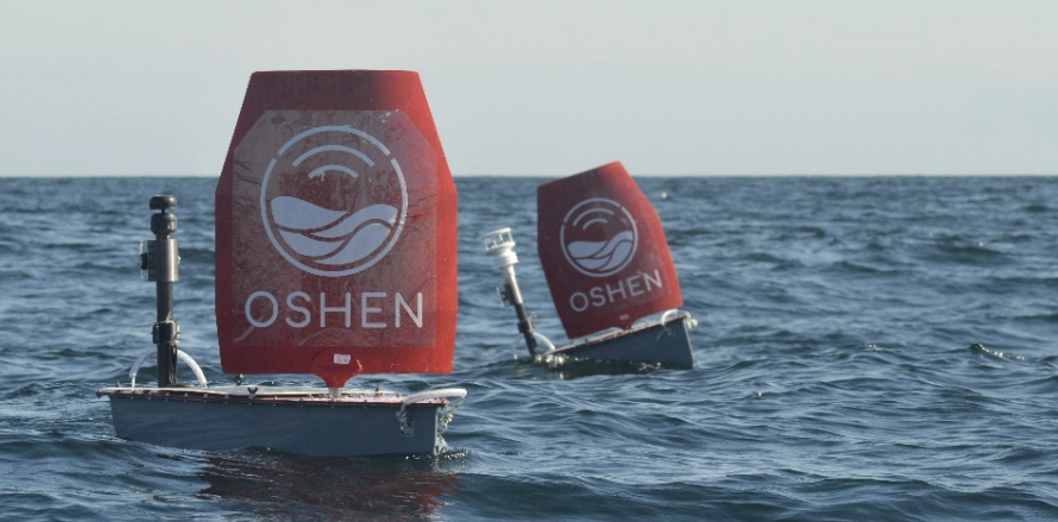
The Captain visited the National Centre for Marine Autonomy again this week and saw some of the work of Oshen.
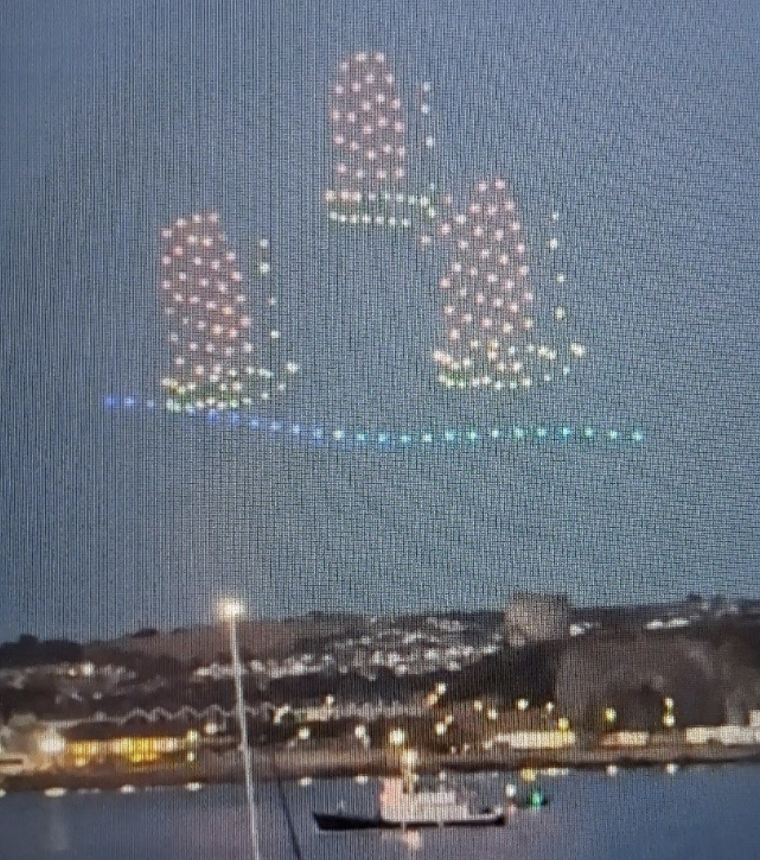
Oshen is another of the cluster of innovative companies running out of Turnchapel Wharf. You may never have heard of them, but you may recognise their product – the C-Star – because images of the C-Star appeared in the sky during the opening act of the recent British Fireworks Championships
The C-Star is a remarkable craft – in its size (small) and capability (significant). The C-Star is one metre long and is truly self-contained (to be more exact, it can spend over 6 months at sea, with no maintenance). More than one hundred have been produced so far (all here in Plymouth) and, at the moment, 32 are at sea – thirteen of them working for the US Government’s National Oceanographic and Atmospheric Administration, monitoring hurricanes off the American coast. Most C-Stars are ‘hired’ from Oshen with a full support package, but if you wished to buy one, that is possible. There is no doubt that C-Star is a very cost-effective platform.
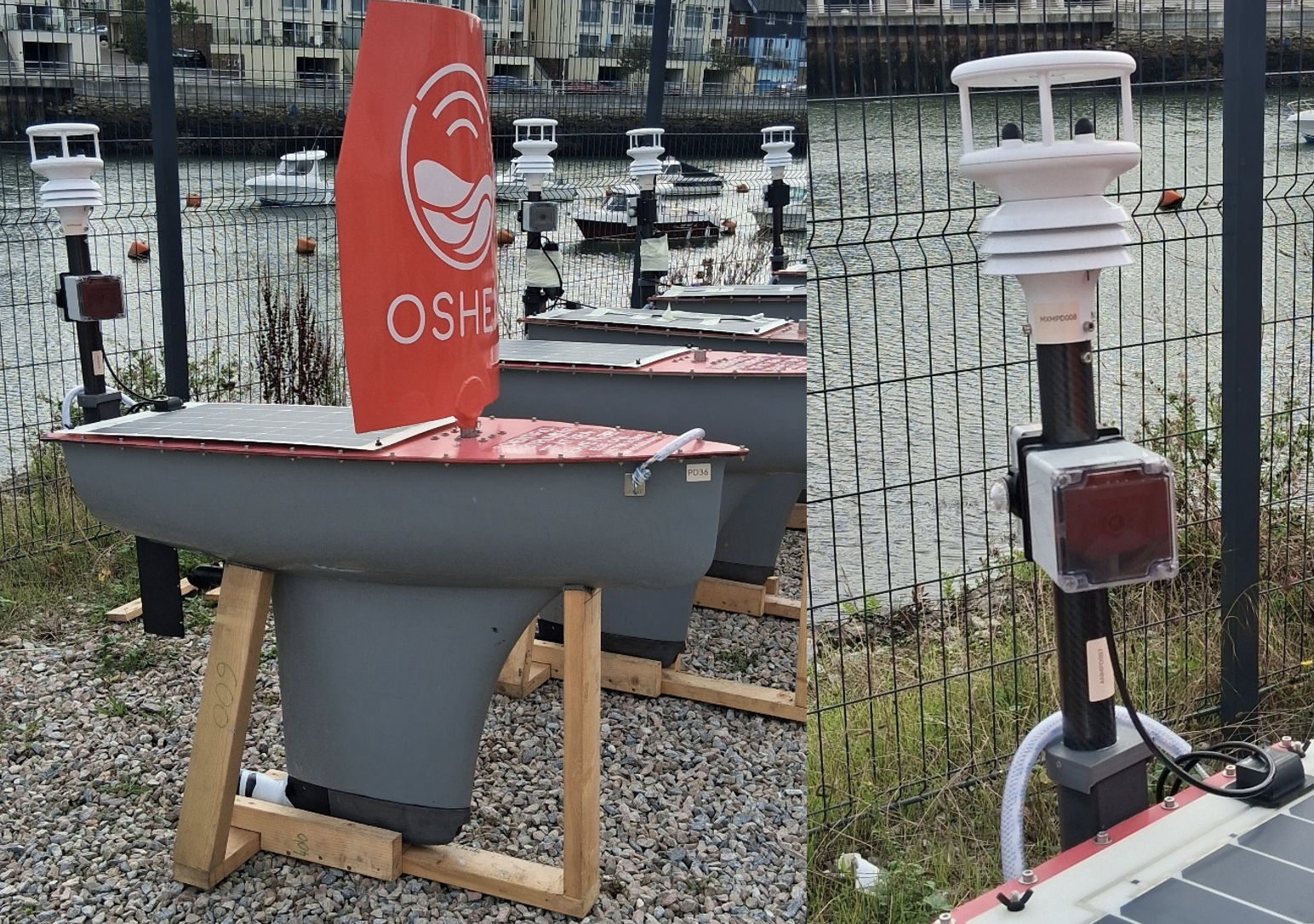
The left-hand photo above shows a fully fitted C-Star. The reinforced plastic hull has a deep keel with a lead weight at the bottom and, just visible in this picture, a sensor (wrapped in plastic) attached to the keel’s trailing edge.
There is a small screw and a comparatively deep rudder under the transom, and the entrance to the equipment bay on deck is covered by a solar array. Under this array is the necessary battery, motor, processors, communications kit, GPSs (duplicated) and buoyancy needed to run the C-Star’s missions. The mast, shown in more detail to the right, has an Iridium satellite communications aerial on top (the flat disc), beneath that the 4 black ‘knobs’ detect wind speed and direction, and the three ‘discs’ are the sensors for humidity, temperature and pressure – so a complete meteorological data gathering station.
The box below the sensors is a camera.
The whole suite of sensors can transmit data and photos back to whoever is running the C-Star. But in fact, the C-Star is designed to act in a group – obviously a Constellation. The NOAA hired Oshen to provide a nine-C-Star constellation in last year’s hurricane season and was clearly happy, as the contract has been renewed for this year, with a constellation of thirteen.
It should be noted that Oshen has only been in existence for 4 years and already employs at least seven Plymouth University graduates (out of a total staff of 25 – and recruiting) - something all Plymothians should be proud of.
Apart from meteorological and ocean surface data gathering, C-Star can also be used for inshore surveying – for example, any port authority could hire one to check all its deep-water channels on a regular basis - and C-Star has demonstrated, with a military-grade hydrophone, its ability to detect both mechanical and biological sound in the sea.
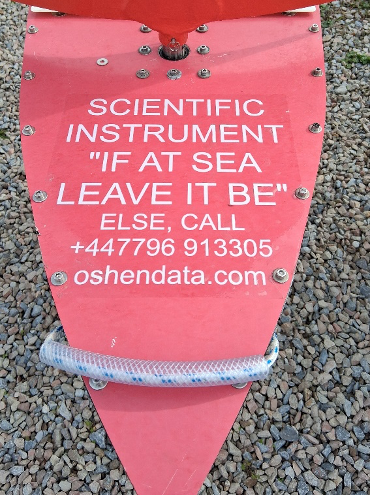
You are unlikely to see one in the Sound, but they are all extensively tested in the lower reaches of the Plym before being packed off to their customers. If you do find one at sea – please read this:
Next week, as well as the usual activities on the Sound, more on what Acua’s Pioneer has been doing for a trial run by the European Space Agency and the UK Space Agency….
Yours aye!
Advertisement:

HMS Bulwark is leaving Plymouth, bound for Brazil
Plymouth-based HMS Bulwark has been sold to Brazil, ending more than two decades of service with the Royal Navy as the UK turns its focus to the future of amphibious assault ships.
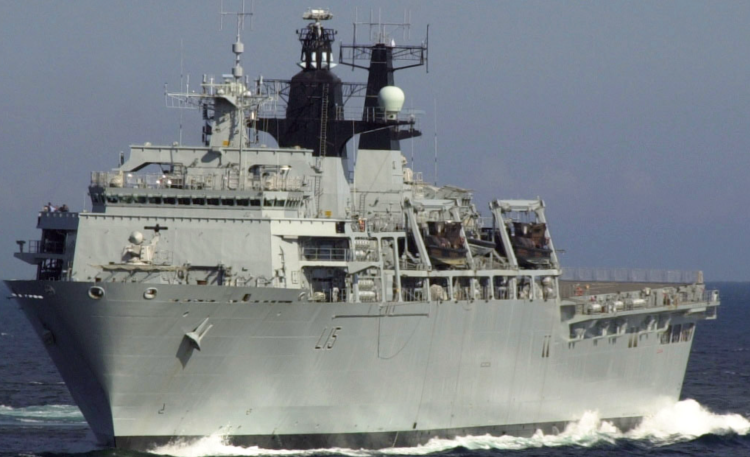
Her sister ship, HMS Albion, remains alongside at HMNB Devonport pending her disposal.
HMS Bulwark served as the Royal Navy’s Fleet Flagship between 2011 and 2015, supported civilian evacuation operations from Lebanon in 2006, and provided maritime security for the Sailing Regatta at the London 2012 Olympics.
OldManSailing - following Chichester
The Beagle is following 'OldManSailing' John Passmore as he attempts to sail single-handed from Plymouth to Sydney.
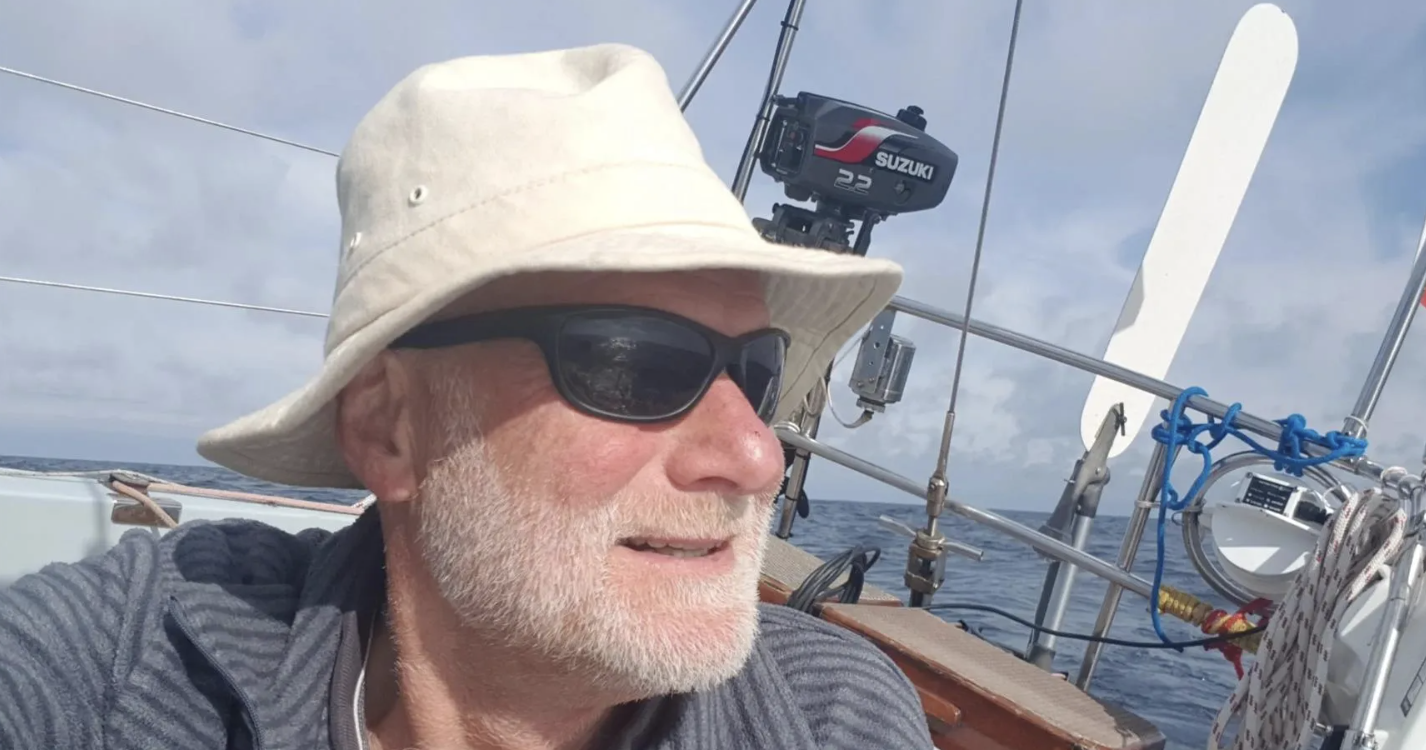
He is now west of Casablanca - having completed 1200 nautical miles (since August 27) with 12,845 still to go! And he was featured in The Times newspaper this week (wonder if they read The Beagle?!)
Follow his progress at Old Man Sailing


Comments ()