
Giant Menorah Lighting this Hanukkah in Plymouth - and the launch of the new Jewish Community CIC

Plus The Captain peers through the hole in West Hoe Pier, a new Beryl Cook sculpture and a new Chris Robinson book!
Plymouth’s new Jewish Community CIC - and why it matters now
Beagle exclusive: by Tom Godwin, Director of Plymouth Jewish Community CIC
There is an ancient Jewish saying: “Do not separate yourself from the community.” For the small Jewish population scattered across Plymouth and the South West, this wisdom has never felt more urgent, or more challenging to live by.
A community with deep roots
Jewish history in Plymouth stretches back nearly three centuries. The synagogue on Catherine Street, built in 1762, is the oldest Ashkenazi synagogue in the English-speaking world. When Drake circumnavigated the globe, his navigator was “Moses the Jew, from Plymouth.” Jewish merchants, silversmiths, and navy suppliers helped build this city, during the Napoleonic Wars, we were one of Britain’s four most prominent Jewish communities. That legacy deserves celebration, not obscurity.
Yet many Jews in the South West feel doubly isolated, disconnected from each other and from the cultural life that sustains identity across generations, while navigating a civic and local landscape where understanding of what it means to be Jewish in Britain today remains profoundly lacking.
Plymouth Jewish Community CIC exists to change that: creating connections between Jewish people, providing a sense of belonging, and building understanding with the wider community. We’re already working with businesses, educational organisations, and charities across Plymouth to share our knowledge and help them better understand the issues facing Jewish people who live, work, and study here.
Bringing light to the city centre
This week we are proud to be co-organising Plymouth’s Giant Menorah Lighting in the city centre for Hanukkah with Rabbi Mendy Singer from Bristol. The festival commemorates an ancient miracle, a single day’s worth of oil that burned for eight nights when the Jewish people rededicated their desecrated Temple. It is, at its heart, a story about light persisting in darkness, about hope enduring against the odds.
There is something powerful about lighting a menorah in public. Across the world, from the Eiffel Tower to the Brandenburg Gate, Jewish communities mark Hanukkah with public displays that say: we are still here. For Plymouth to join that tradition with a bigger and better Grand Menorah event this year feels both momentous and necessary.
Why now?
The honest answer is that being Jewish in Plymouth has become, at times, frightening. In recent months, our Holocaust memorial was defaced. A Jewish family was verbally abused while walking to synagogue. A Jewish home was picketed with abusive placards. A Jewish woman was accosted on the Hoe and demanded to “explain” Israel’s actions, as though she were personally responsible for the policies of a government thousands of miles away.
These are not distant headlines. These are our neighbours, our friends, our families. In workplaces across Plymouth, Jewish employees have faced colleagues displaying politically charged imagery in meetings. Some have been denied access to anti-racism support groups because their Jewish identity wasn’t recognised as a minority status. The message received, whether intended or not, is that Jewish safety and Jewish identity occupy a lesser category of concern. And so, we decided to speak, to organise, and to build something positive that says clearly: we are here, we belong here, and we intend to stay
What we hope to achieve
Our aims are straightforward: build community among Jewish people who feel isolated, share our culture through events and partnerships, and stand against antisemitism, not with anger, but with presence, pride, and the simple insistence that we belong in Plymouth’s public life without hiding who we are.
Two thousand years ago, Rabbi Hillel asked: “If I am not for myself, who will be for me? If I am only for myself, what am I? And if not now, when?” Plymouth Jewish Community CIC is our answer to these questions and we need allies. If you work in civic life, education, business, faith communities, or the voluntary sector and believe a visible Jewish community enriches our city, get in touch. Partnership, platform, or solidarity, all are welcome. Who will stand with us? We hope it’s you.
To find out more, including details of our Giant Menorah Lighting this Hanukkah, visit www.plymouthjewishcommunity.org
West Hoe Pier not expected to survive this week’s storms
Big questions about the competence of “repairs” and of Plymouth Council
By The Captain, Beagle maritime correspondent
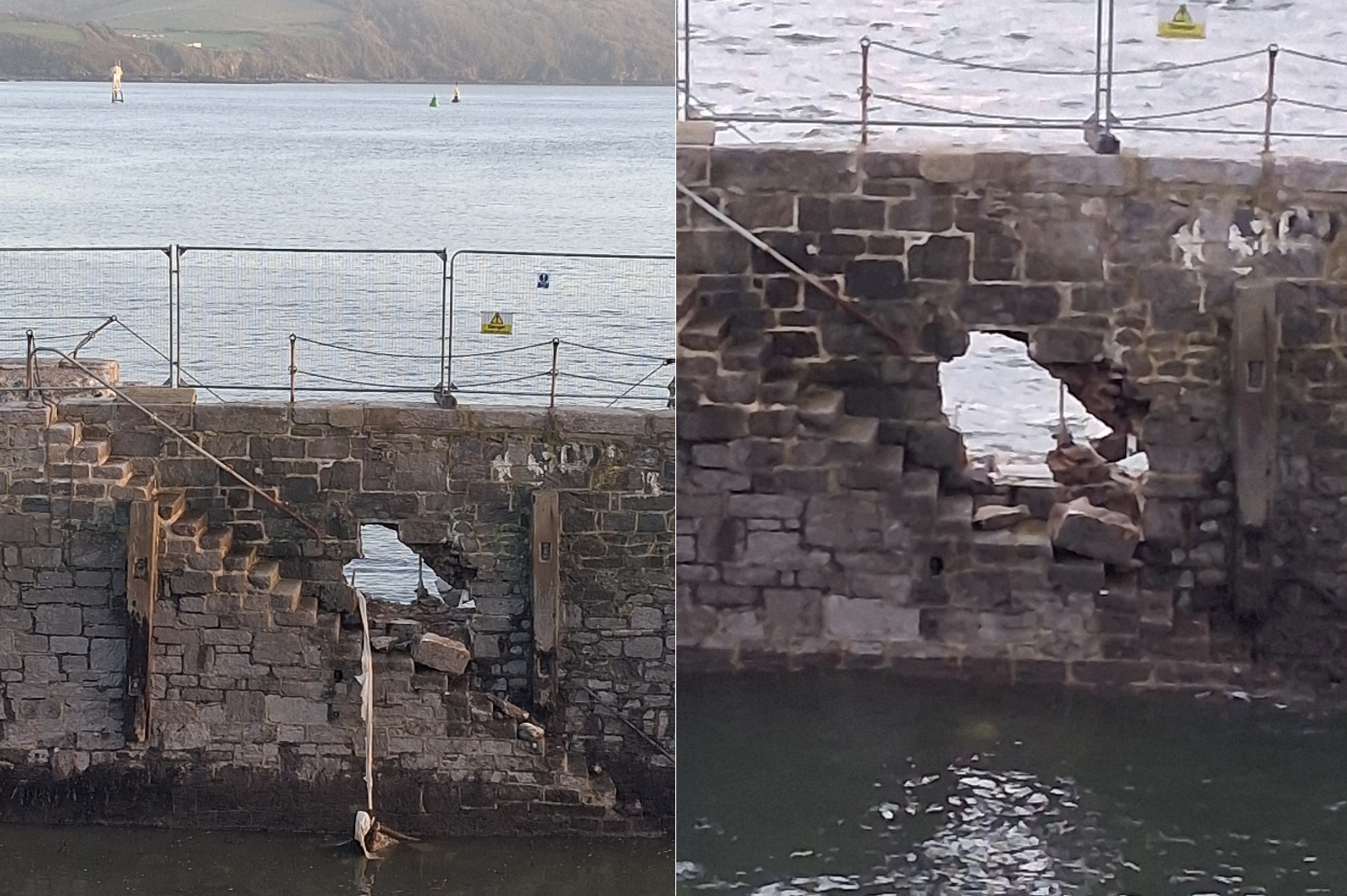
Back in April, I wrote:
“It continues to amaze this ‘ancient mariner’ why the seashore authorities (not just PCC!) fail to understand the power of the sea. Many of us will remember the saga of the …. the rebuilt (twice) steps down into the West Hoe Harbour, …. the sea swimming pool below Pier One, which was filled in & the concrete platform to the seaward side rebuilt – only for the platform to wash away in the first storm months later ….. none of these were subject to ‘Great Storms’ – just normal winter weather. I fear that those authorities that I am criticising will say ‘austerity’, ‘value for the public purse’ etc., but I suspect that the real reason is that repairs are funded from current spending & that the cheapest solution will usually therefore be chosen, whereas a better – more sea-resistant – job now, would almost certainly save money in the long-term (but that’s someone else’s problem).”
The West Hoe Pier is a Grade II listed building (Entry 1113299 on English Heritage’s website). This means that it is “designated for its special architectural or historic interest”. The pier’s datestone is 1880 and the little harbour was originally built so that stone could be shipped from the West Hoe quarry.
On 10th June, PCC issued a press release that said, in part:
“An arm of West Hoe pier is being fenced off as a safety measure ahead of repair work which is expected to start this summer…… The Council has been monitoring its condition for some time and commissioned a survey to review next steps. It has now received recommendations for the work, which will involve replacing various granite steps and blocks that have fallen away, refilling voids that have been created by the sea, repointing as well as replacing timber strakes. We are currently finalising the detail and programme of the work with a specialist marine engineering company.”
Sadly, it looks as if the works took too long a time to start – eventually, in the Autumn, scaffolding was put in place, the outside walls were repaired and then the scaffolding was removed. It seems that some of the ‘filling’ in the pier was removed and when storm Bram arrived on 9th December, the waves sucked more filling our – so the centre of the pier filled with water and eventually, the weight of water pushed the seaward wall out. The swell then ran against the inner wall, which lost one block.
By 1545 that afternoon (Wed 10th), the hole had opened up considerably (LH picture) and by this (Sunday 14th) morning, the hole was further enlarged and part of the steps had gone. I fear it will only need one period of rough weather and we will be left with the end of the pier standing alone. How long that will last, with water swirling all around it, is anybody’s guess.
To my concerns of April last, I could have added the tendency to do “too little, too late”, which I fear is what has happened to the West Hoe Pier. Even if the rest of the pier doesn’t collapse, the cost of repair will now greatly exceed the cost of the original ‘repair work’. As the old wives’ wisdom has it ‘ a stitch in time saves nine”.
Historian Chris Robinson launches new book of Plymouth memories
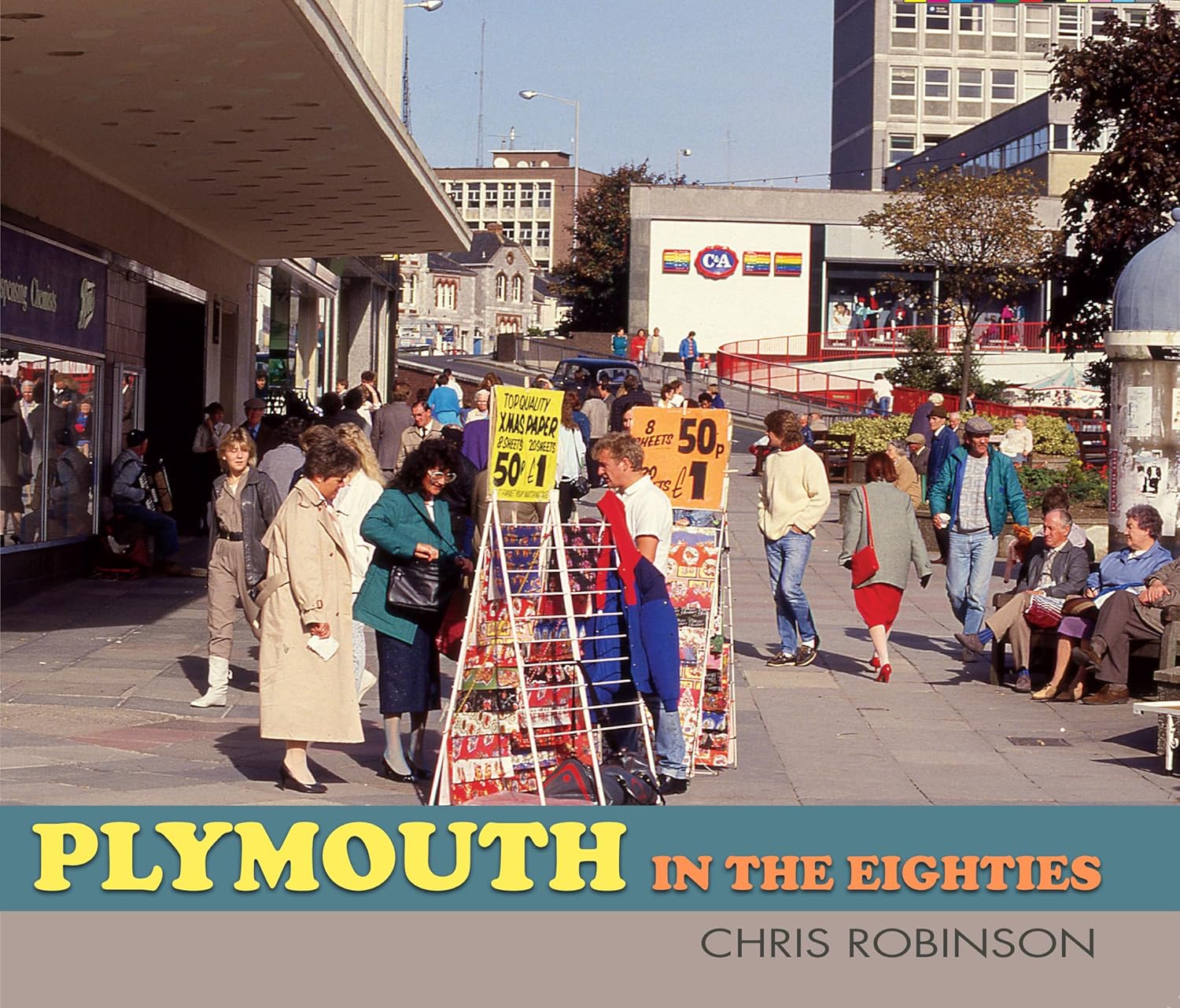
The Theatre Royal recently saw the launch of Pen and Ink’s latest publication - “Plymouth in the Eighties” by renowned city historian Chris Robinson, exactly 40 years after the launch of his first – also in the, then brand new, Theatre Royal.
The invited audience, writes The Captain, were mostly of an age to remember the 80s – some even appeared in the selection of illustrations that Chris used in his introduction. The presentation was very well rounded off with a short speech from the Lord Mayor, Councillor Kathy Watkin, who gave an excellent summary of its appeal.
Chris is Plymouth’s resident historian and his books on the City cover from the Bronze Age to today – I look forward to the volume covering the Nineties. The volumes on specific decades are probably the ones of most general interest – for proper Janners, those of us who have only been only here for 30 years, and the more recent arrivals.
His ‘Then & Now’ series compare Victorian photos of the city with today and provide much food for thought and, in some cases, much pondering at changed road layouts. As the most heavily bombed British city (by area and population), the views of the centre of pre and post WWII Plymouth are very difficult to reconcile. The oft-repeated cry that the post-war planners did more damage than the Germans has a degree of truth in it. But to return to Chris’s book, the Eighties saw a whole wave of development – quite a bit of which has been/is already being redeveloped – Armada Way being perhaps the prime example.
Topics well illustrated include the building of the Parkway (opened in 1983), the Dockyard’s involvement in the Falklands War in 1982 and the burning down of Dingles (one of five House of Fraser stores attacked by Animal Rights Terrorists protesting against the fur trade) in 1988. As well as the physical changes to the City, Chris’s wide sweep also covers such diverse subjects as developments in Nightclubbing, Health, Education, Shopping and, of course, Argyle and Albion. As is probably obvious, I am a fan of Chris’s books and certainly bought the latest.
Plymouth is very lucky to have its own historian and this latest volume would be an excellent Christmas present………
Dangerous fencing reported to council
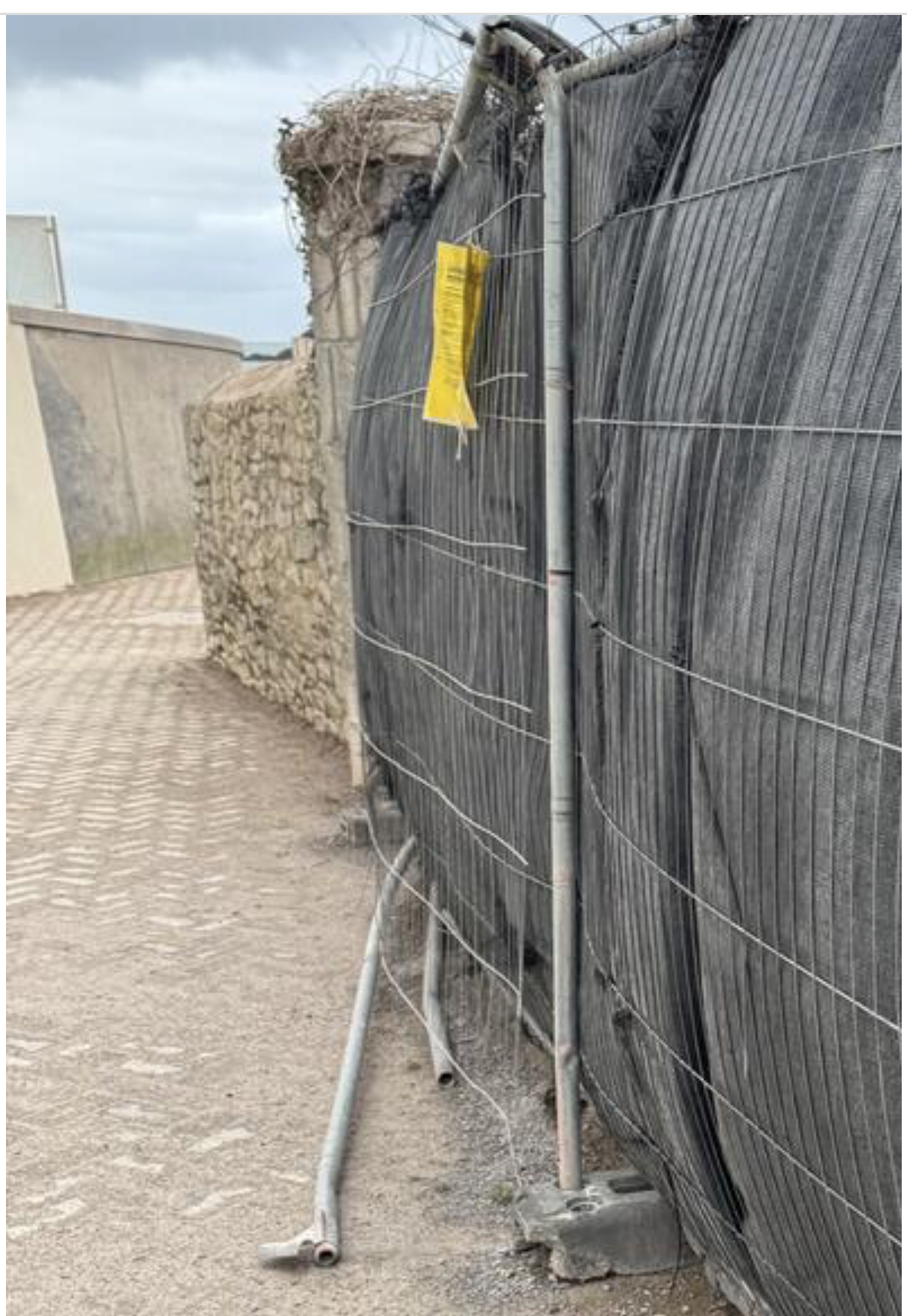
Beaglers have been watching with interest the ongoing development work at West Hoe adjacent to the RNLI station.
But now concerns have been raised about the temporary fencing at the site.
Concerned dog walkers have reported the fence to Plymouth Council, saying it is clearly not fit for purpose and poses a risk to humans and animals from the “spikes”.
However Plymouth Council has dismissed the complaints, stating it carried out a safety inspection and “no defects were identified that reached a safety intervention level.”
It added: “We will continue to monitor the condition.”
Photo and report: Mona C Saplanski
Beryl Cook’s characters to come to life on The Hoe - and across Plymouth
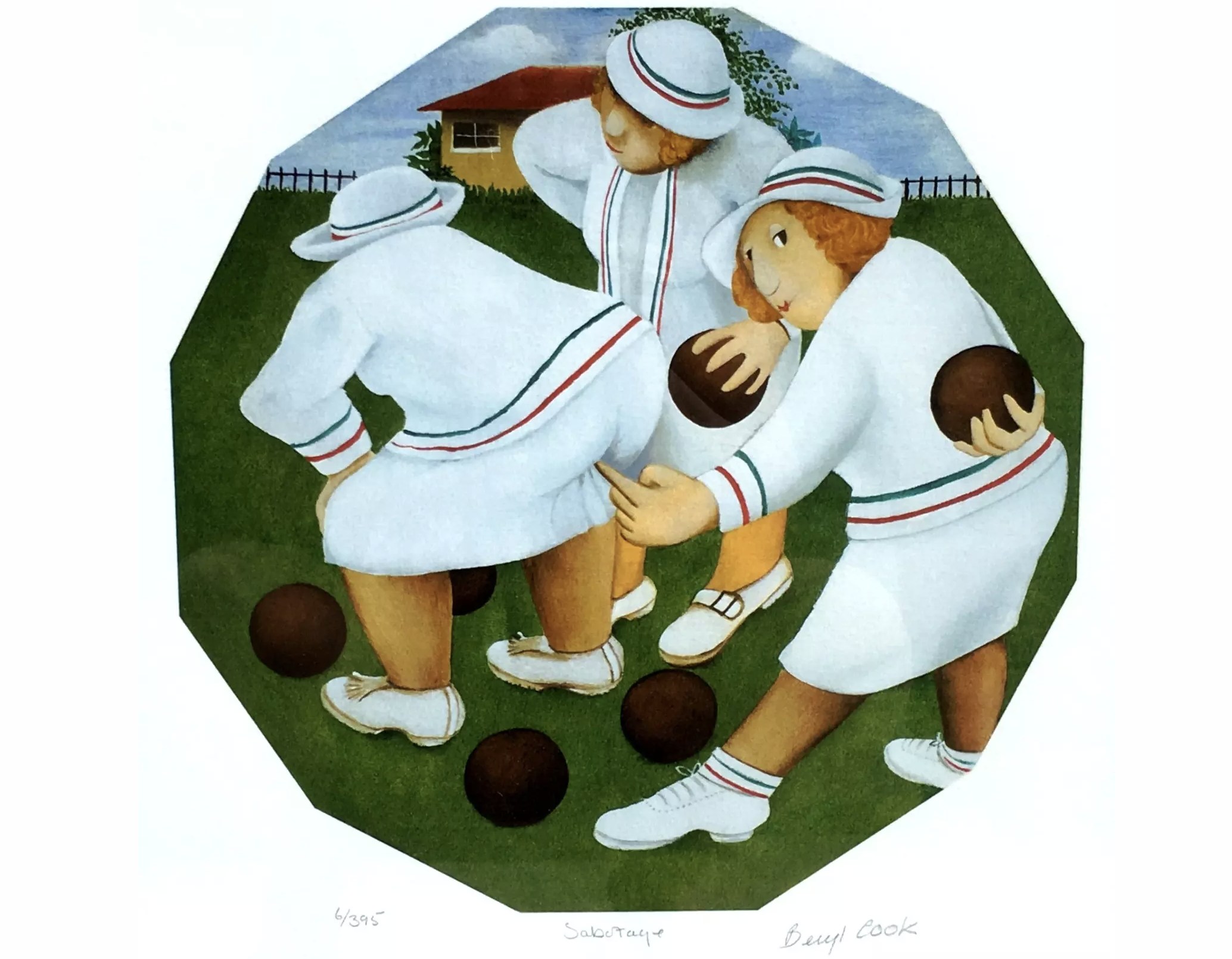
A life size sculpture celebrating the work of artist Beryl Cook is coming to the Hoe.
It’s one of four to be placed around the city as a major exhibition into Beryl’s work opens at the Box museum next month.
A bowls player will be positioned on the edge of the Peace Garden on The Hoe, near the bowling green that inspired the painting ‘Sabotage’ in 1975.
The four figures have all been carefully selected in consultation with Cook’s family and feature scenes deeply rooted in Plymouth life:
The others are:
Sailors and Seagulls (c.1970) – One of the jolly sailors will take up residence on the bench outside The Dolphin pub on Southside Street, The Barbican, ready for countless selfies with locals and visitors alike.
Pannier Market (1978) – A cheerful shopper will appear in the Pannier Market on Frankfort Gate, capturing the bustle of Plymouth’s shopping heart just as Beryl painted it.
Tom Dancing (1976) – The figure of Brian Pearce (aka drag performer Ruby Venezuela) will stand near the former Lockyer Tavern on Old George Street in the city centre, celebrating Plymouth’s vibrant LGBTQ+ history and nightlife.
The project realises a long-held ambition to create a Beryl Cook presence in Plymouth's public spaces. The sculptures will be fabricated and installed by TR2, with The Box taking responsibility for maintenance throughout the installation period. They will remain in place for the duration of the Beryl Cook: Pride and Joy exhibition. Each one is designed to be accessible and Instagram-worthy, inviting people to interact, photograph, and share their encounters with Beryl's world using #BerylsPlymouth and tagging @theboxplymouth.
Sophie Cook, Beryl’s granddaughter, said: “These sculptures are such a fitting tribute to Beryl in her centenary year. She loved Plymouth and Plymouth loved her back. Seeing her characters come to life in the actual places she painted them – The Hoe, the pubs, the market – would have absolutely delighted her.”
:: Beryl Cook: Pride and Joy opens at The Box on 24 January 2026 and runs until 31 May 2026.
Advertisement:


Comments ()