
'Disgraceful' attack on Mayflower Memorial; beach asbestos mystery continues as £4.2m pontoon nears completion; and how big is it, asks The Captain!

Friday October 9, 2026
Explicit graffiti on the Mayflower Steps Memorial was finally cleared yesterday (Thursday) on the fourth attempt, one week after it happened.
A specialist contractor was called in to protect the Grade II-listed memorial near the Barbican, which commemorates the Mayflower's 1620 voyage to the New World as a pivotal moment in history.
Plymouth City Council ward councillor Andy Rose (St Peter and the Waterfront) told The Beagle it was an “an absolute disgrace”.
Sadly, the graffiti remained on Wednesday when members of the Jewish community gathered for local memorial services to remember the lives lost in the Hamas attack of October 7 2023. Councillor Rose had urged Plymouth Council to temporarily cover the slogans while it struggled to remove them.
“This display of thuggery and lack of intelligence (not to mention spelling) displays how far our city authority has floundered. It is disgraceful," Councillor Rose said.


Graffiti at Mayflower Steps Memorial. Note: we have edited the pictures to remove obscenities. (Pics: A Rose)
How big is that?
It is quite easy when looking out to sea to underestimate how far away something is or indeed how big it is, writes The Captain
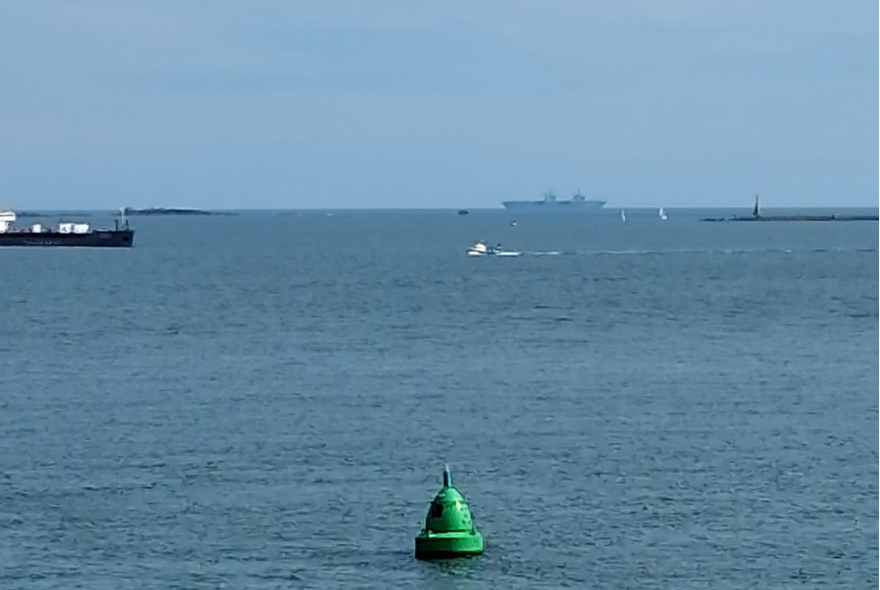
For example, HMS Queen Elizabeth was briefly anchored south of the breakwater a couple of weeks ago (Mon 28th September). She is 932ft long (284m), which is about one fifth the length of the breakwater, so in the photo below she is about 2½ miles from Smeaton’s Tower, or, if you looked north, she’d be near Derriford Hospital.
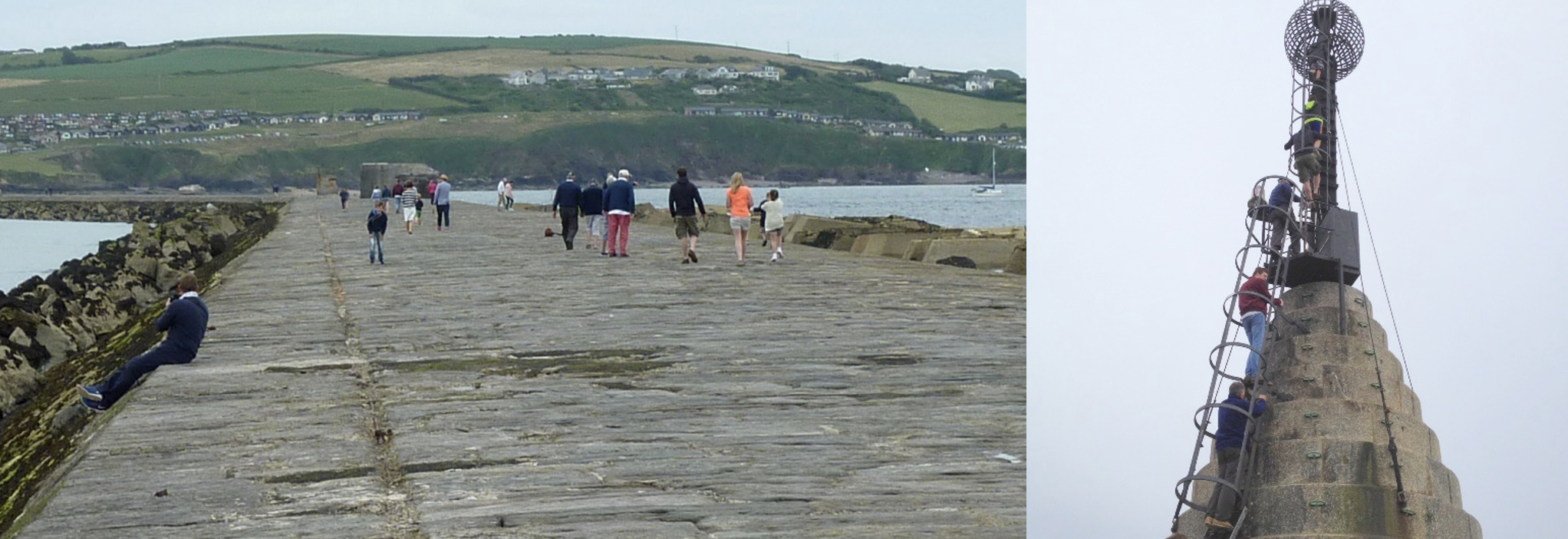
And how about the beacon on the eastern end of the breakwater – well, this is bigger than you’d think. The sphere on top of the beacon, about 6ft/1.8m in diameter, is a refuge built so that up to six shipwrecked seamen could shelter until the storm that sank their ship passed.
In Victorian and Edwardian times, regular, comparatively unregulated boat excursions took people to walk and picnic on the breakwater, which is 13 metres wide and 1500 metres long. Nowadays, getting permission is a very complicated process…
If you are ever lucky enough to get out there, don't try to get into the refuge on top of the beacon; the King’s Harbour Master will not be amused. In the photo below-right, a retired rear-admiral led the group investigating the inside of the refuge. Even so, QHM (as he was then) sent the MoD Police out to firmly tell them to get down!
Another first for the waterside's remote technology - and this time there's a link to the European Space Agency
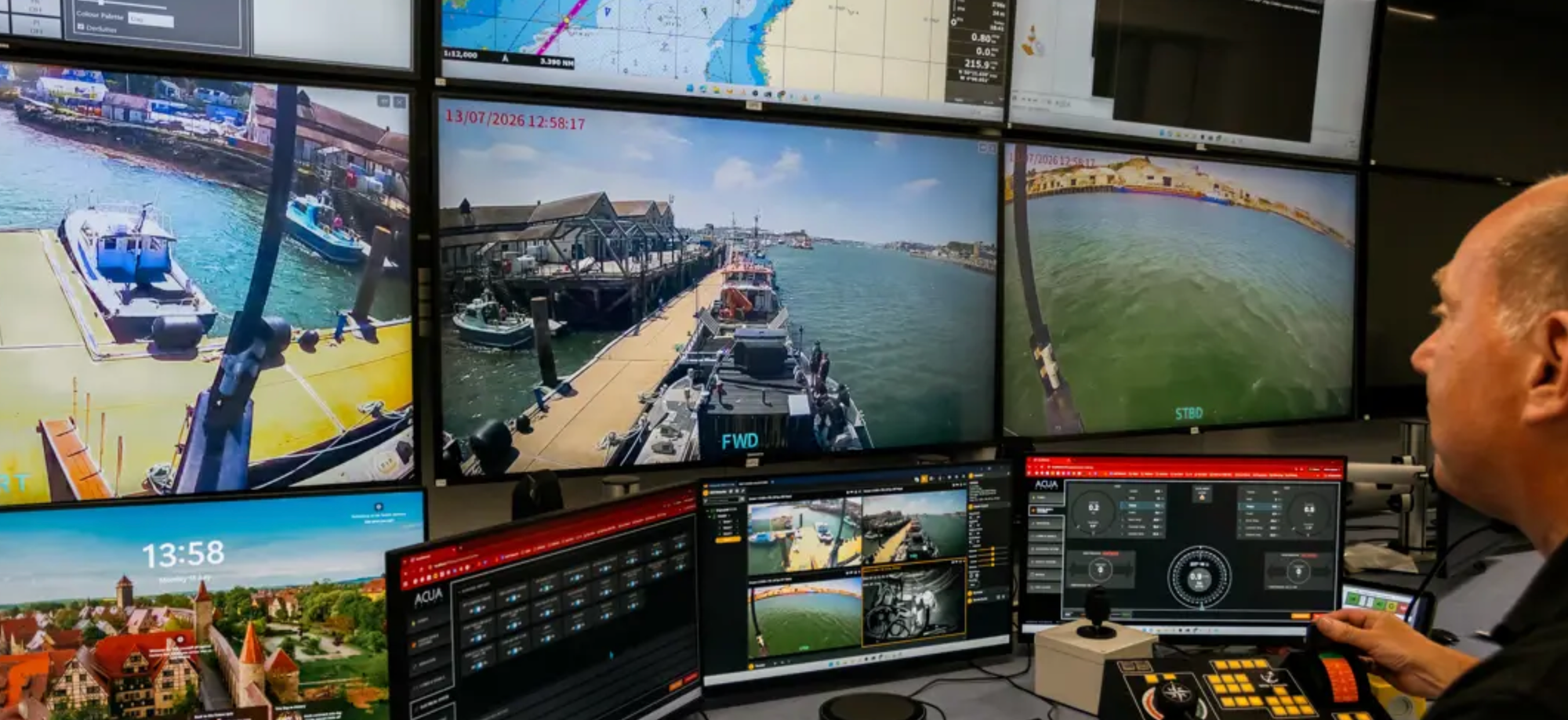
A Plymouth-based marine technology company has successfully completed trials that could pave the way for more underwater work without crews at sea.
ACUA Ocean used its uncrewed surface vessel Pioneer to launch and recover an underwater remotely operated vehicle during three weeks of testing in Plymouth.
The trials completed more than 40 underwater deployments, including eight launch and recovery cycles in a single day. Remarkably, neither vessel needed anyone aboard.
ACUA Ocean’s Remote Operations Centre at Turnchapel Wharf controlled Pioneer, while French company Forssea Robotics supported its underwater vehicle remotely from Sète in southern France.
The trials, carried out under contract to the European Space Agency, included operations south of Plymouth Breakwater in seas of up to two metres and winds gusting to 30 knots.
The technology could ultimately allow offshore inspection, survey, and other subsea work that currently requires conventional crewed ships to be carried out remotely.
It is another significant development for Plymouth’s rapidly growing autonomous marine sector.
Billion-pound plans from South West Water owner - but will any cash leak into the sea?
South West Water's owner has announced plans for £1 billion in additional investment in its water and sewage infrastructure, just days after problems at Plymouth’s main sewage works led to pollution entering Plymouth Sound.
Pennon Group announced the investment programme as part of a major reset which includes raising £550 million from shareholders and cutting its dividend.
But for the waterside, a question lingers: how much of the dosh will be spent fixing the troubled sewage treatment works at Cattedown?
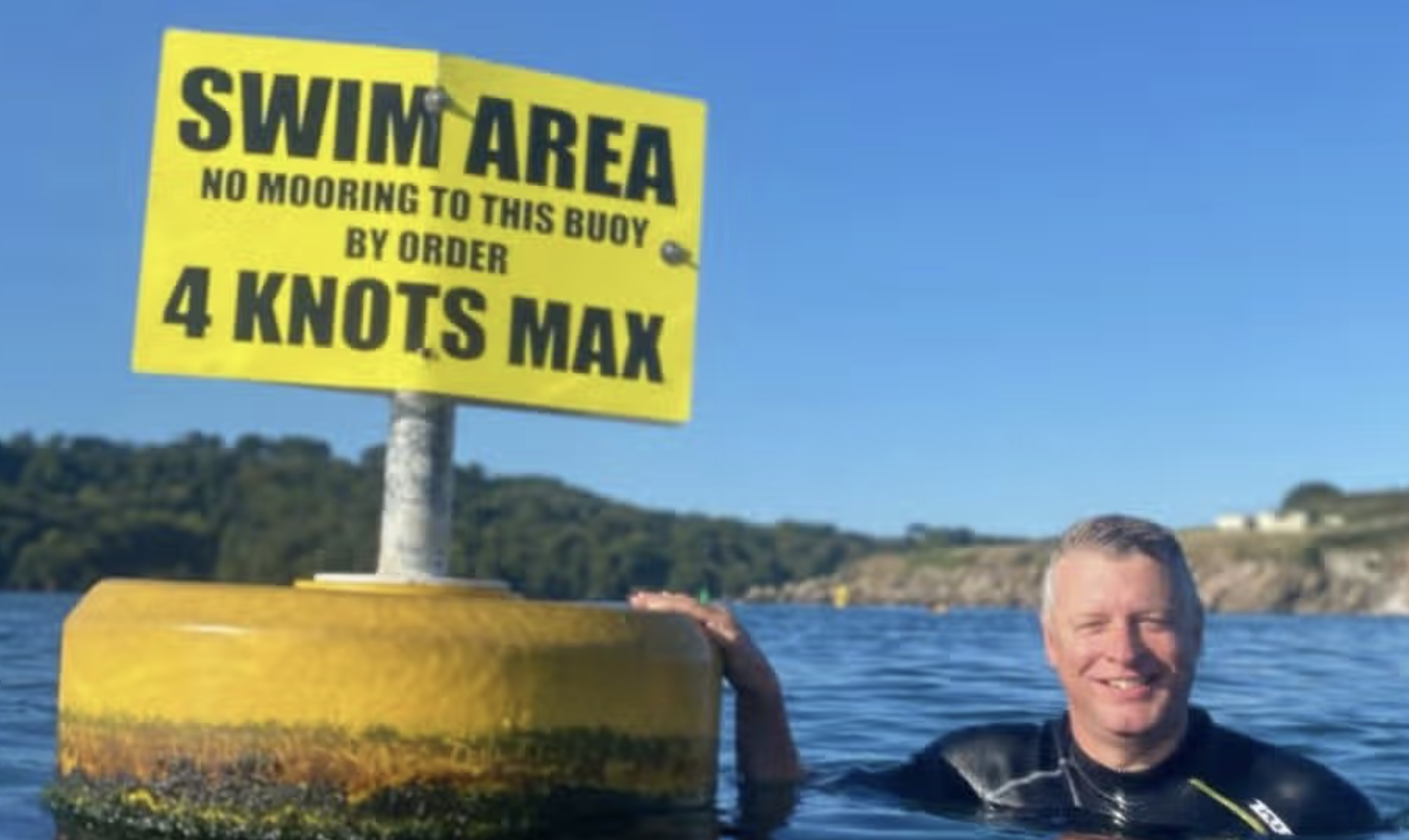
Yesterday's announcement comes less than a week after the Environment Agency revealed operational problems at Plymouth Central Waste Water Treatment Works. The agency said what it considered an unpermitted sewage discharge had entered the estuary, prompting warnings to people thinking of swimming in the water around the Hoe.
Plymouth MP Luke Pollard has subsequently called on South West Water to publish an investment plan for the Cattedown works within six weeks.
Scene on the Sound, by The Captain
The Beagle's maritime correspondent, a real-life retired Royal Navy Captain, keeps his eyes on the horizon, 24 hours a day
This week a larger than usual number of warships in and through The Sound:
SD Victoria entered port on Saturday last.
HNoMS Otto Sverdrup, a Norwegian frigate, arrived on Sunday, probably for a period of FOST training. She was last here in April this year.
RFA Proteus, the British multi-role surveillance ship, was in and out on Wednesday
INS Trishul, an Indian ‘Krivak III ' general-purpose frigate, arrived early on Thursday morning, probably for a weekend ‘courtesy call’ – what used to be called ‘Showing the Flag’ (more on her in a moment.)
HMS Dauntless, an RN Type 45 air defence destroyer, was briefly anchored in the Sound on Thursday
HMS Sutherland, an RN Type 23 frigate, continues here training, as does FGS Hessen, a German air defence frigate (slightly smaller than, but very similar to the RN’s Type 45 air defence destroyer). As I’ve written previously, National nomenclatures for ship types can be confusing and contradictory.
And a Portuguese submarine (probably NRP Tridente) entered Devonport on Thursday afternoon.
Almost like the ‘old days’!
The submarine NRP Tridente was last here for a week about a year ago. It is likely that she will be acting as a target for the other NATO warships training here, but, of course, that won’t be a one-sided training package as Tridente will be trying to sink Sutherland, Otto Sverdrup and Hessen, just as diligently as they will be after her.
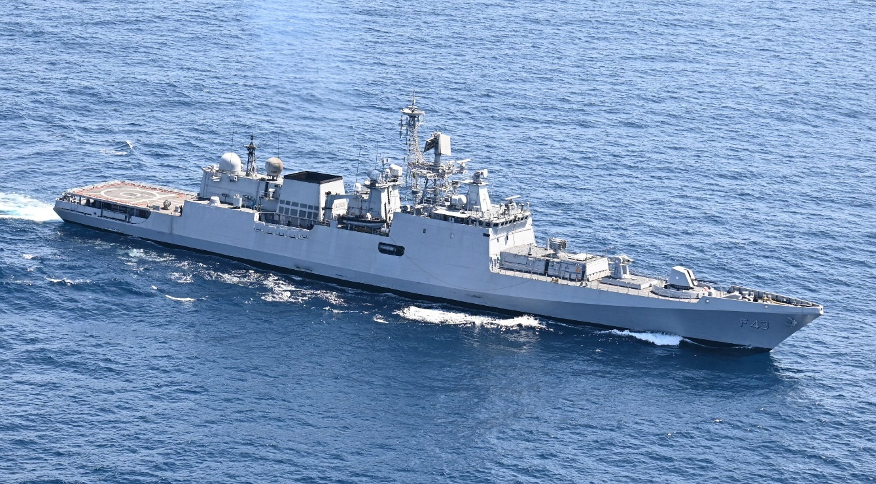
So, this week’s more unusual visitor is the Indian navy’s Trishul. She was built in the Baltic Shipyard in St. Petersburg, Russia, and commissioned into the Indian Navy in 2003. In essence, she is slightly smaller than, but equivalent to, the RN’s Type 23 frigates in their general-purpose version. I called her a ‘Krivak III’ above. This is a NATO designation for a Russian (originally Soviet/Warsaw Pact) warship. All Soviet surface warship classes used to be given a name beginning in K by NATO. The original Krivaks were specialist anti-submarine frigates, with the first one entering service in 1970. There have been several different variants since and the Krivak IIIs were built for the Border Forces of the KGB, on the same platform as the earlier Krivaks, but with a more general-purpose weapon fit and a large flight deck aft for an embarked helicopter.
The Indian versions (the Talwar class) have a mix of mostly Russian weapons systems and sensors, and a few Western ones.
There are currently nine ships in the class, with another under construction. Trishul arrived here from France and will probably visit other European countries. She may even return to her birthplace….
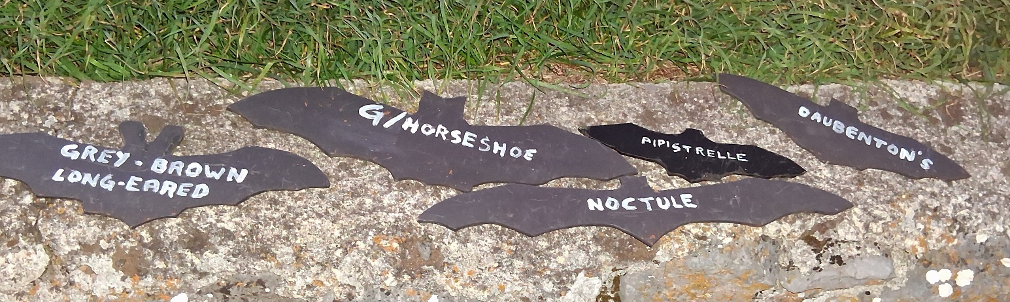
On Wednesday evening the National Marine Park (NMP) Coastal Rangers and the Devon Bat Group organised a Twilight Bat Walk at Devil’s Point. This was a part of the NMP’s regular programme to get the people of Plymouth interested in what is around them and, especially, what is in The Beagle area – on the edges of the Plymouth Sound Marine Park. If you want to know what is planned, either sign up via the NMP website
About 30 people of all ages (at least 7-77) gathered at the Devil’s Point car park where the Devon Bat Group gave a very good introduction to bats generally and the bat types we might see – although wisely (with a fresh breeze blowing) they did warn that the bats might not bother to come out to forage – which they do at sunset.
In the event, the bats did appear, and the group was well entertained for about 30 minutes down by the open area beyond the fortifications. This Autumn, Bat Walks were held at Ernesettle Creek, Kinterbury Creek, Devil's Point, Southway Nature Reserve, Devonport Park, Central Park and Ford Park Cemetery. It is only worth holding them in the Autumn as the nights draw in and the bats are stocking up for their Winter hibernation. Bat Walks will restart in September 2027.
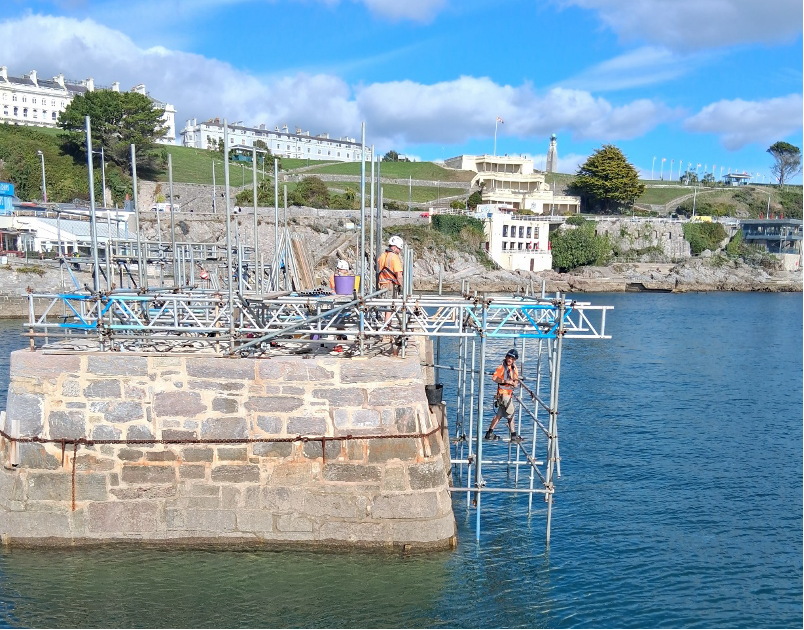
Finally, to West Hoe Harbour. A large area of scaffolding is being built on the western end of the eastern arm to let the stonemasons work on the pier's outer end. It seems they hope to finish the seaward side ‘before the winter’, but this is increasingly unlikely. The stonemasons will finish as much as they can before the weather becomes too dangerous, then remove the scaffolding for the winter. The top of the pier won't be finished this year, and it now looks like the whole rebuild won't be finished until late Spring/early Summer 2027.
Mount Batten beach asbestos mystery continues as £4.2m pontoon nears completion
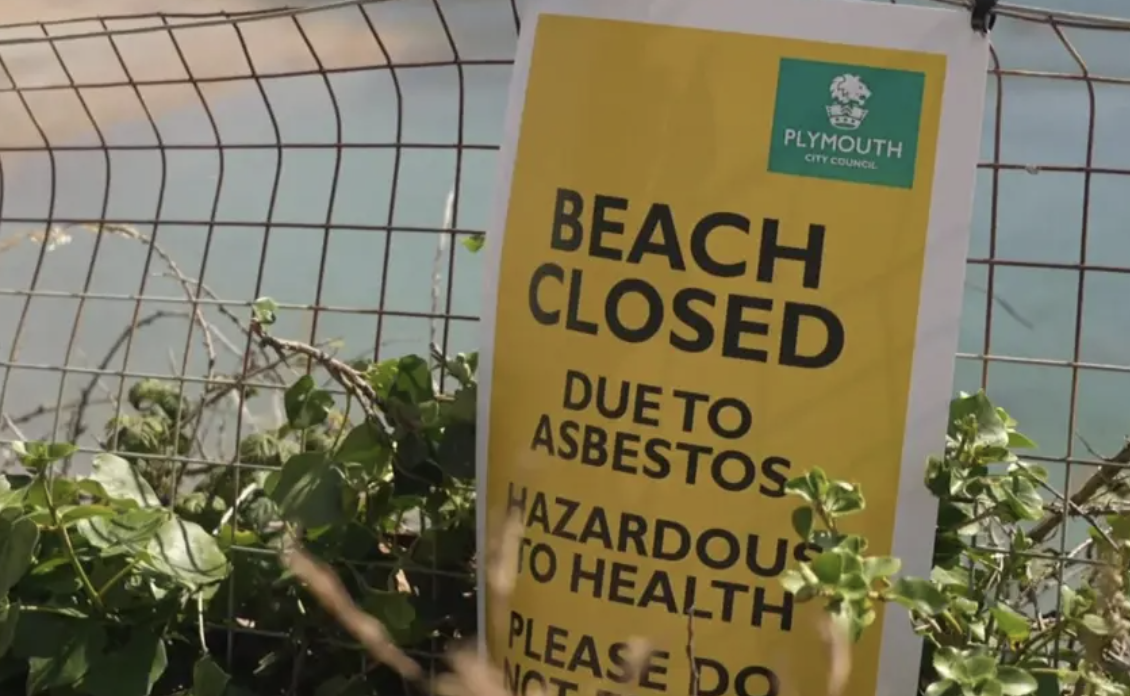
Plymouth City Council has confirmed that the source of asbestos contamination that has kept Mount Batten beach closed remains a mystery.
The council has told The Beagle it has established a dedicated project team and is preparing to appoint specialist contractors to carry out further land and marine investigations.
Additional testing has also been commissioned at other waterfront locations to establish whether contamination is confined to the areas already identified.
The beach has been closed since asbestos-containing material was discovered earlier this year, with restrictions also affecting parts of the foreshore.
The council said identifying the source was essential before a solution could be agreed, with health specialists advising on the safety criteria which would need to be met before the beach could reopen.
Specialist contractors will be asked to investigate the source and recommend options for remediation and recovery.
The council acknowledged frustration over the continuing closure but said the work needed to be “robust and comprehensive”, adding that reopening the beach safely remained a high priority.
Meanwhile, there has been better news nearby on the long-awaited £4.2 million Mount Batten pontoon project.
The council has told The Beagle that the main construction work is now complete and the scheme has reached its final “snagging” stage. However, there is still no firm date for the project to become fully operational.
The council, Cattewater Harbour Commissioners and Mount Batten Centre are finalising lease arrangements ahead of operational responsibility transferring to the centre. The Mount Batten Centre will then publish details of the services available from the new pontoon and the charges users will face.
The project was designed to replace the ageing pontoon with improved facilities for ferries, visiting vessels and other harbour users.
OldManSailing - following Chichester
The Beagle is following 'OldManSailing' John Passmore as he attempts to sail single-handed from Plymouth to Sydney. As we published, John was 661 miles SE of Conakry, Guinea.
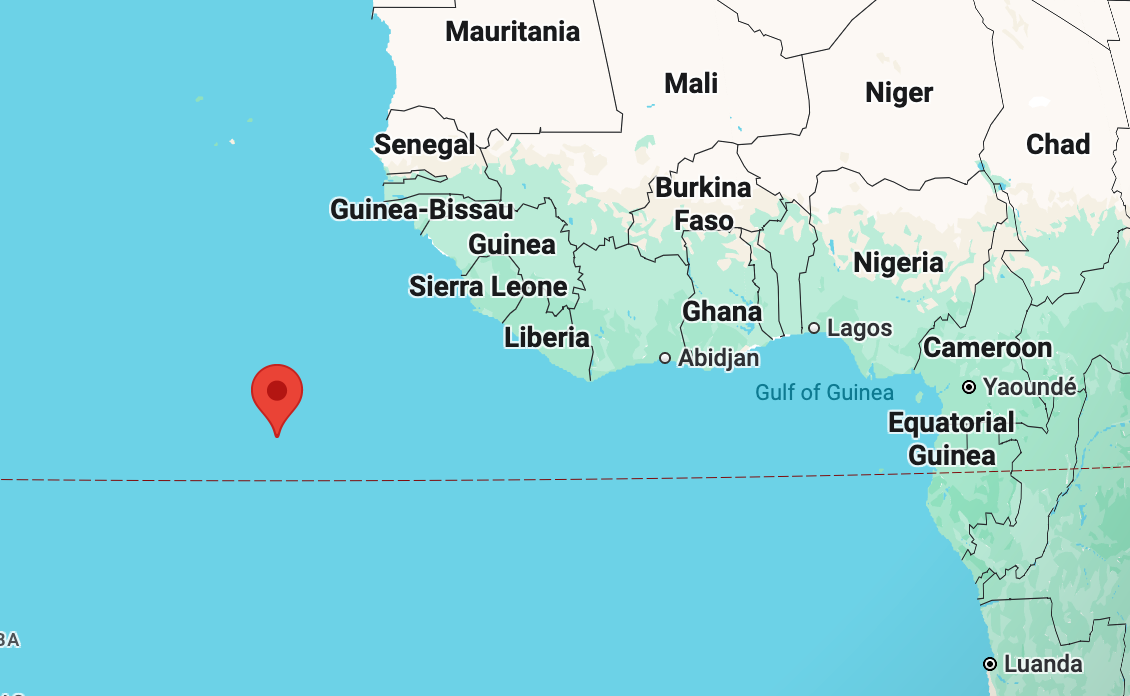
He has completed 3,480 nautical miles (since leaving Plymouth Sound on August 27) with 10,880 miles still to go!
Advertisement:


Comments ()