
Consultation starting on Hoe Blue Badge parking; extra money for Devonport; and why Janners should be prouder of Plymouth
It's The Beagle on Friday July 17, 2026
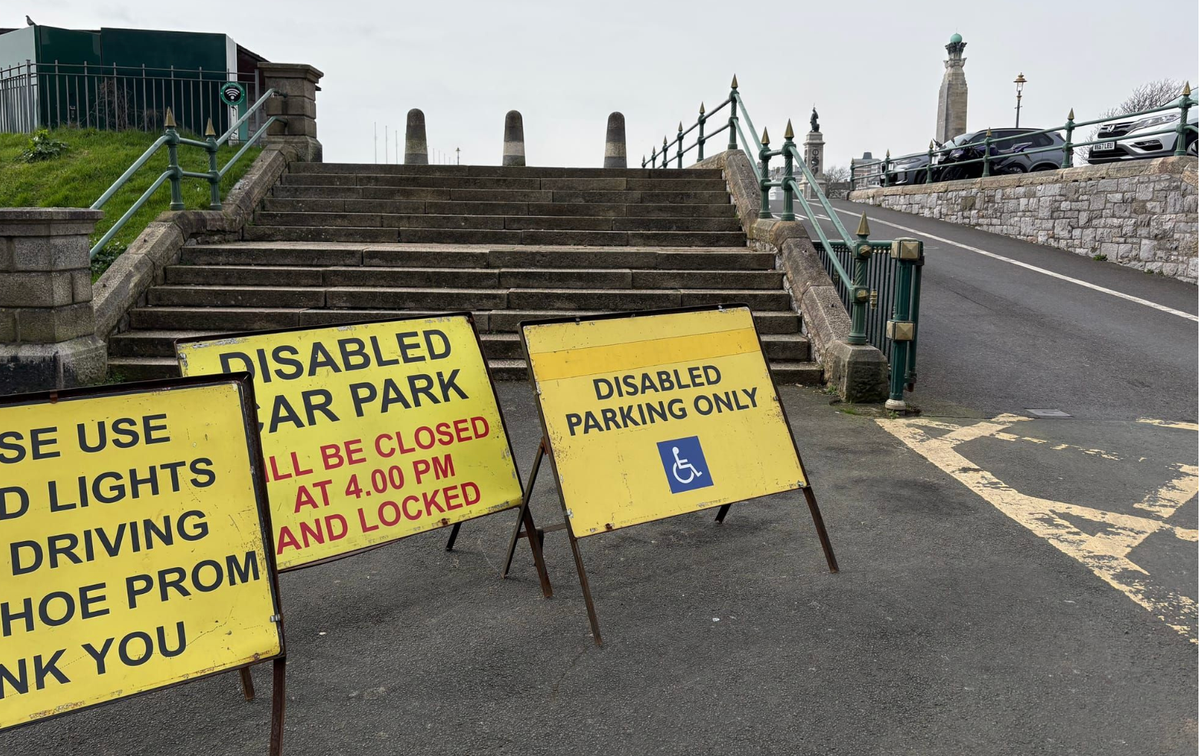
A public consultation is starting on Plymouth Council's proposal to start charging for Blue Badge parking on the Hoe.
As first reported in The Beagle earlier this year, the move was one of a raft of new parking measures for waterside car parks.
This week PCC announced a major U-turn on some of its plans.
Plans to introduce charges at the Jennycliff and Mount Batten car parks have been dropped. And proposed charges for the Strand Street car park (near the Cremyll Ferry) will be reconsidered as part of a review of car park provision.
However the proposed charges for the blue badge area on the Hoe Promenade will still be advertised as planned later this month - and people will be able to share their comments before any final decisions are made.
Hoe Park and West Hoe Park win Green Flag status (again) - as locals complain about litter
The Hoe and West Hoe parks have picked up an international quality mark for parks and green spaces. The Green Flag status is managed by Keep Britain Tidy and recognises and rewards well-managed parks and green spaces, setting a benchmark standard for the management of green spaces across the United Kingdom and around the world.

It comes as dozens of people took to social media this week to complain about the louts who leave litter after enjoying the waterside's open spaces.
Helen Cleave posted on NextDoor: "The Hoe is so beautiful, but it's so sad that people can't take home their litter, plenty of bins, no excuses, I often wonder how these people live in their homes if this is normal behavior."
The Beagle has nothing but admiration and gratitude for the Plymouth City Council clean-up crew who look after The Hoe. But we'd like to see more enforcement action against litter-droppers and those who don't pick up dog poo.
This week's Scene on The Sound
by The Captain (The Beagle's maritime correspondent)
Another lovely week looking out over the Sound. The Type 23 frigate, HMS Portland sailed from Devonport on Monday 6th July and since then has continued to be in and out of the Sound – spending most of her days out in the local Exercise Areas and usually coming in to anchor overnight. The RN calls this ‘day-running’, which means out at sea during the day and at anchor, or alongside, overnight.
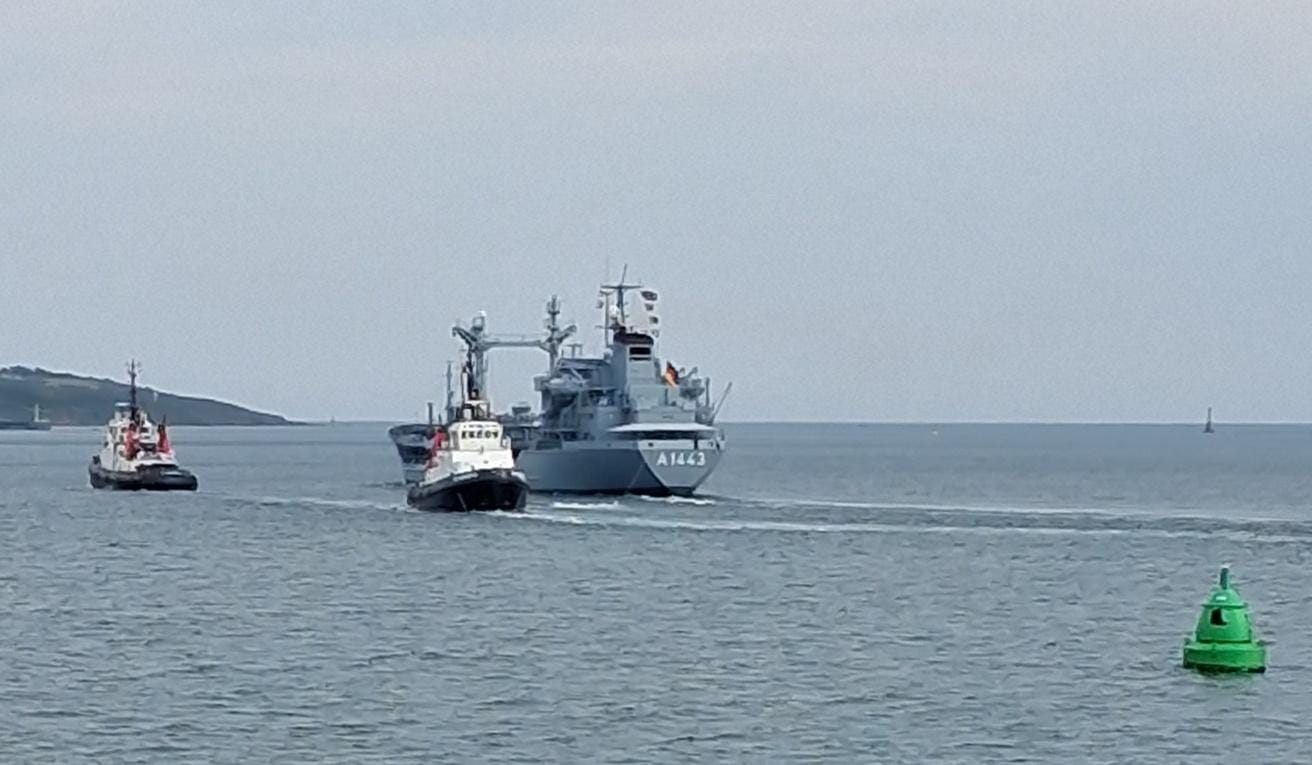
The only foreigner here for training with FOST (Fleet Operational Standards and Training) at the moment is the FGS Rhoen – a German navy replenishment tanker. Rhoen is now approaching 50 years old (it’s not only the Royal Navy that has to run on old ships) and is about one-quarter of the size of the Royal Fleet Auxiliaries Tide-class ships.
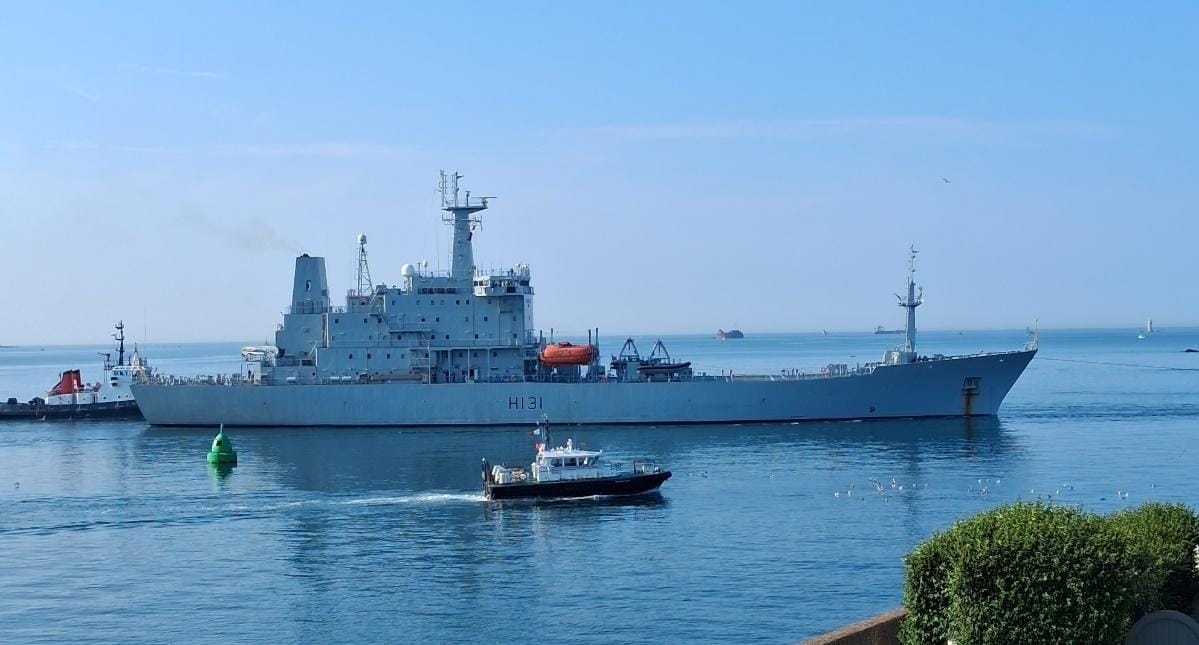
HMS Scott, reported on last week, is now back alongside – via some ‘Index Berthing’. This bit of navalese means that she is doing an independent (not covered by any visiting training staff) exercise (Index) and is practising bringing the ship alongside.
These exercises could be so that a potential Commanding Officer (CO) can get used to how his (or her) ship performs during the berthing process – so factors like how quickly (or, indeed, slowly) does she react to the helm (rudder) and how she loses momentum as the engine revs are reduced. As well as the CO, there is a requirement for officers who are eligible for command to be trained in getting their ship alongside. Index Berthing is a bit of a nightmare for the actual CO, as he has to let someone else drive his ship, but is still responsible if there’s an accident.
As well as HMS Scott, HMS Dauntless arrived in Devonport today. She is the second of the Type 45 air-defence destroyers and entered service in 2010. She was last in the Plymouth area in January this year. Despite what the armchair warriors say, the Type 45s are formidable platforms with excellent sensors and weapon systems – the only UK asset that is capable of shooting down ballistic missiles. Unfortunately, financial pressures led to short-cuts being taken in their engineering systems – such that a major Powerplant Improvement Programme (PIP) had to be put in place almost as soon as the first, HMS Daring, was deployed to the heat of the Arabian Gulf.
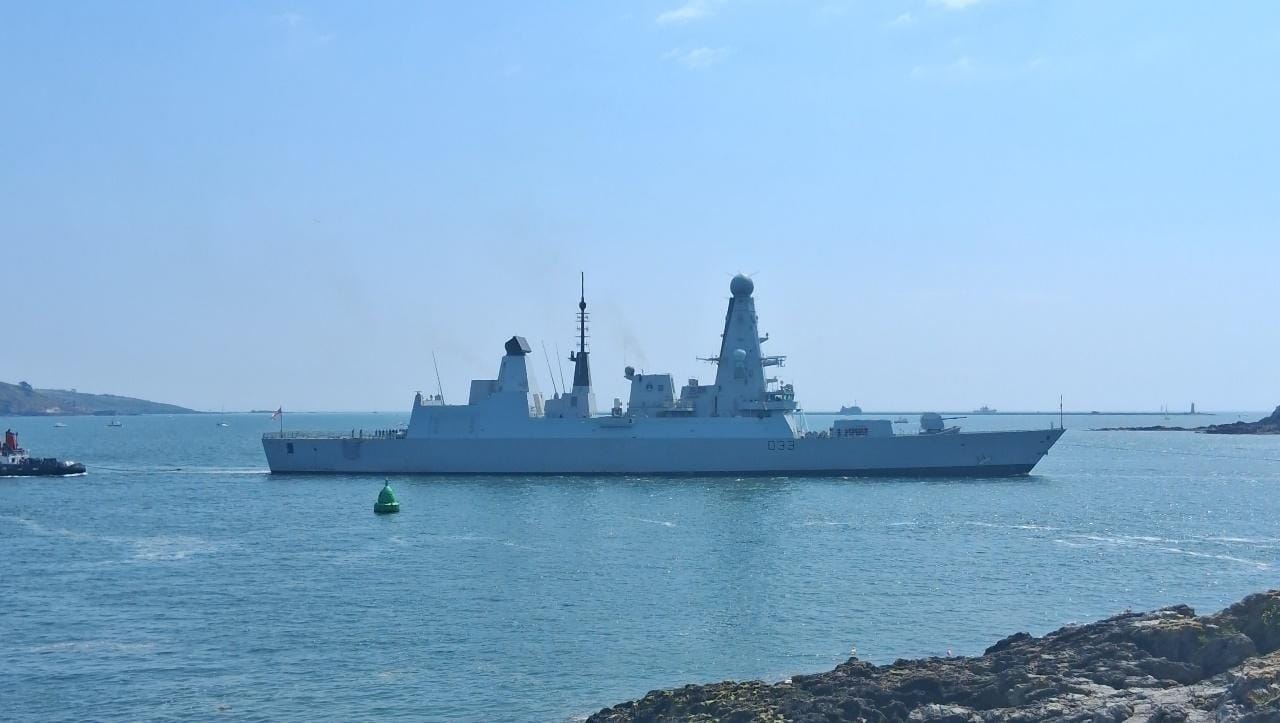
As the second of the class, Dauntless was the first to be PIP’d. If you’d like to know more about the PIP, read this: https://www.navylookout.com/in-focus-the-power-improvement-project-for-the-royal-navys-type-45-destroyers/
There are several sailing events taking place in and around the Sound. This weekend is the Port of Plymouth Sailing Association’s 2026 Regatta and on Sunday the Royal Western Yacht Club are holding the Devon Yawl National Championships. A Yawl is a two masted sailing vessel where the mizzen (after) mast is aft of (behind) the rudder post – as opposed to a ketch, where the mizzen is forward of the rudder post. Devon Yawls are a class of 16-foot sailing dinghies, mainly based here in the Southwest.
For those that want to keep a close eye on the sporting events happening on the Sound, the King’s Harbourmaster keeps a Water Events Diary - click here to read it
Yours aye.
Extra money promised for Devonport upgrade
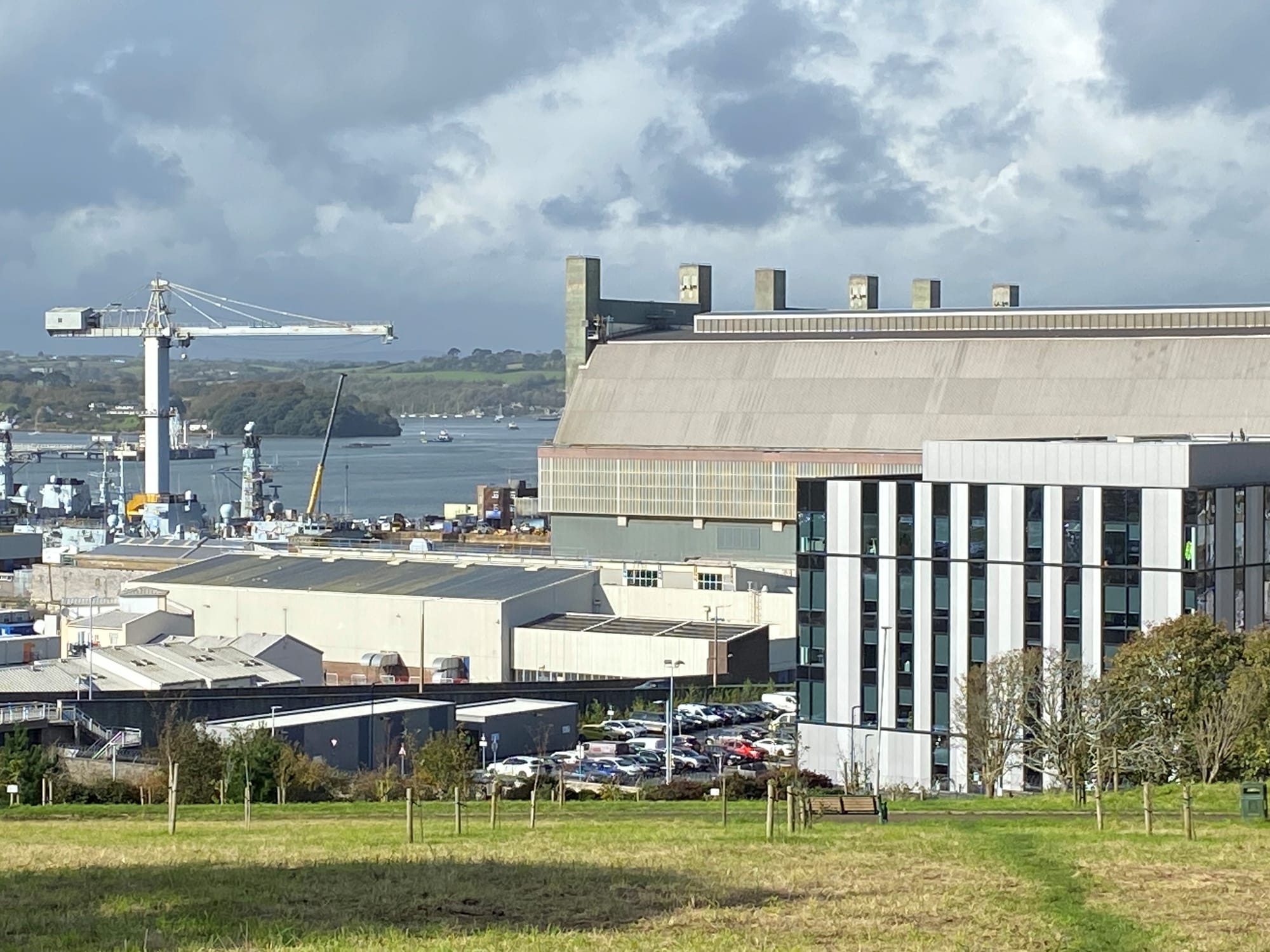
Devonport is to see £7 billion of upgrades over the next decade as part of a Government investment plan - 60 per cent more than what was already promised to the city.
The investment includes the modernisation of 10 Dock for refits of the Astute-class submarines, further upgrades to 15 Dock, and the modernisation of 14 Dock as part of the submarine refuelling programme.
The city council said the government investment would guarantee operations at the naval base, the largest in Western Europe, and Babcock’s Devonport Royal Dockyard, through to at least 2070.
Advertisement:

The business of Fame – and why Janners should be prouder of Plymouth
By Jon Gripton
It has been almost a year in the making.
Now, with opening night just weeks away, Theatre Royal Plymouth is preparing to unveil what could become the most important production in its modern history.

Fame The Musical, which opens on July 28, is the first show to be entirely produced, built and financed by the theatre itself. If it succeeds, it could establish Plymouth as a producing powerhouse whose shows tour nationally and internationally. If it doesn't, the financial consequences will be felt much closer to home.
The production marks the latest stage in chief executive James Mackenzie-Blackman's ambition to transform Theatre Royal Plymouth from what he describes as "a hall for hire" into a theatre that creates hit productions rather than simply hosting them.
That strategy has already seen TRP co-produce The Artist and The Devil Wears Prada, the latter transferring from Plymouth to London's West End, where it has now been running for more than 19 months. The former has yet to open elsewhere (although watch this space for possible news soon).
Both productions were backed by outside investors.
But Fame is different.
This time, the theatre is backing itself.
"I'm feeling the pressure," admitted Mackenzie-Blackman. "We're in a very specific moment. And I genuinely believe we're going to create something extraordinary. It has huge commercial potential. It's a title people know, and it's the right moment."
He says there is already "industry buzz" surrounding the production, with theatre professionals flying in from the United States to see opening night.
But for Mackenzie-Blackman, the project is about more than ticket sales.
"I don't want TRP to just be a hall for hire," he said. "I want it to be a thriving, producing theatre where there are jobs for artists.
"Plymouth is full of extraordinary artists and makers. We've always been a city that makes things, and TR2 is part of that story.
"I think it's quite easy to be down on ourselves. People aren't always kind about the place they live. I'd love Plymouth to be a bit more like Liverpool because Scousers are incredibly proud of their city. I'm a Plymothian, and I'd love, over the next decade, for people here to be prouder too."
There's a pleasing symmetry to the choice of production. Fame received its European premiere at Theatre Royal Plymouth 30 years ago, making this revival something of a homecoming.
Set in 1980s New York at the High School of Performing Arts, the musical follows students from audition to graduation as they chase success in music, dance and acting.
Director and choreographer Tom Jackson Greaves, Theatre Royal Plymouth's associate artistic director, believes the story is as relevant today as it was three decades ago.
"Fame is an integral part of our history at Theatre Royal Plymouth," he said. "It's a story of discovery, determination and dreaming. It also champions the power of performing arts education and how important it remains in shaping careers, identities and relationships."

For audiences, it's another major musical.
For Theatre Royal Plymouth, it's a statement of confidence in its own future and perhaps in Plymouth's too.
(This article first appeared in the South Hams Gazette)

Comments ()