
All you ever wanted to know about the Cremyll Ferry; meet the sailor inspired by the Beagle; a chance to tour inside the Reel; Scene on the Sound; and some things for the weekend

The Beagle, Friday October 30, 2026
Plymouth sailor plans new expedition inspired by HMS Beagle
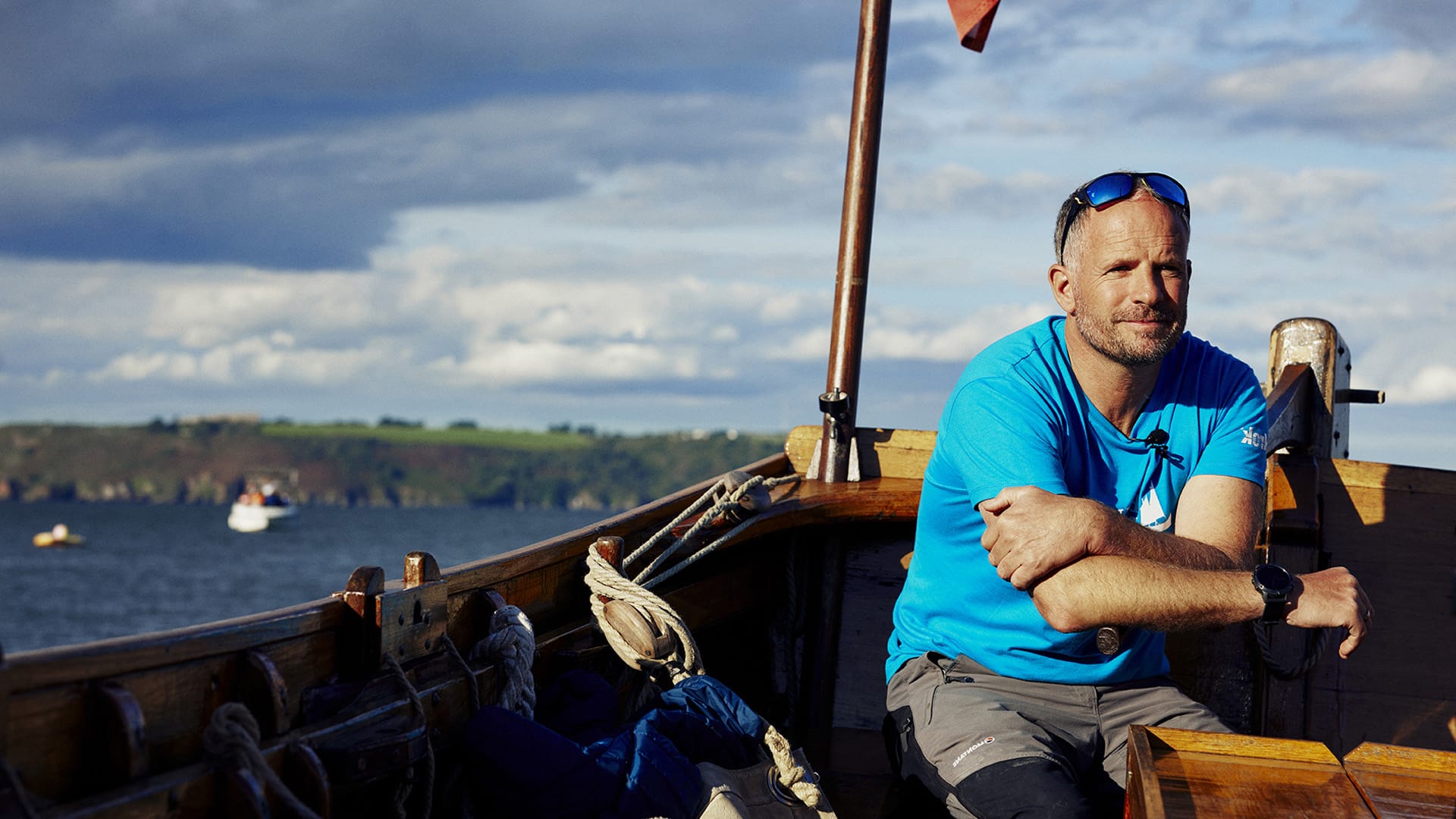
A Plymouth-based adventurer is planning a new sailing expedition inspired by HMS Beagle, the famous Royal Navy ship that carried Charles Darwin on his voyage of discovery - and the ship that gave us our name!
Round-the-world yachtsman Conrad Humphreys hopes to recreate aspects of the Beagle’s pioneering exploration of South America aboard a 26ft sailing vessel called Hope.
The project has particular significance for Plymouth, where HMS Beagle departed on its first surveying expedition on May 22, 1826 — exactly 200 years ago this year.
Humphreys, who has sailed around the world three times, plans to begin his new adventure in 2027, initially exploring the West Country before heading to Scotland, Scandinavia and Norway.
His longer-term ambition is to sail Hope to Patagonia, retracing aspects of the Beagle’s original expedition.
The project follows his successful restoration and operation of Bounty, a 23ft replica of the open boat used by Captain William Bligh following the infamous mutiny of 1789.
The vessel, which featured in Channel 4’s Mutiny, now takes visitors on sailing adventures around Plymouth Sound, departing from Mount Batten.
Speaking to sailing website Sail-World, Humphreys said: “Bounty taught me that heritage boats aren’t museum pieces. They’re a way of getting people to feel history, not just read about it.”
He said Hope would celebrate the achievements of Robert FitzRoy, who took command of HMS Beagle during its first expedition and subsequently captained the ship on Darwin’s famous voyage.
The Beagle’s second expedition departed Plymouth on December 27, 1831, carrying the young Darwin on the five-year voyage that would help shape his revolutionary theory of evolution.
Humphreys hopes his latest project will connect that remarkable maritime history with modern ocean science, navigation and meteorology.
Plymouth Boat Trips - Part 1: The Cremyll Ferry
By The Captain
Plymouth Sound has an extensive series of ferries and cruise boats running across it. All of the local ferries, with the sole exception of the Mountbatten Ferry, are run by Plymouth Boat Trips from their HQ on Commercial Wharf in the Barbican
Their oldest service is the Cremyll ferry. It was first documented in the year 1204! Initially, the ferry was rowed by a crew of several men and could carry horses, livestock and carts, as well as foot passengers. The original route ran from Devil’s Point to Barnpool. Those who have stood at Devil’s Point when the tide is in full flood will realise what a hazardous crossing this was – it could easily take over an hour.
The path from the Barnpool landing site went up the hill and past the site of the present Mt. Edgcumbe House, to the north side of Maker church. This historic path is still in use today, but ceased being the Cornish end of the Cremyll ferry service in about 1730, when it moved to the present site at Cremyll.
When Royal William Yard was built in 1825, the Plymouth end of the ferry moved to Admiral’s Hard. The first steam ferry, as in the photo below, ran from 1885.
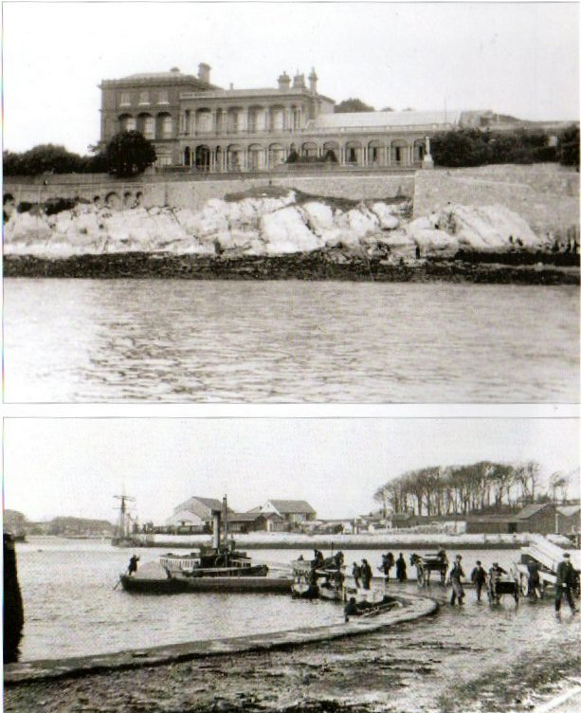
For 400 years, from 1511, the Earl of Mount Edgcumbe ran the Cremyll ferry. It is said that the Earl’s Winter Villa at Stonehouse was built for when it was too rough for him to cross the Tamar, but it is also said that the Earl wanted somewhere more modern and comfortable than Mt Edgcumbe House. The 50-room summer villa was sold to the Sisters of Nazareth in 1927, bombed in the war, rebuilt and is now Nazareth House.
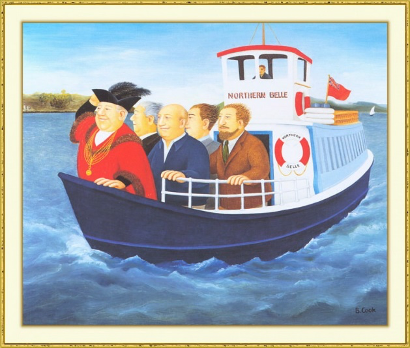
After several different owners, a disputed retendering by Plymouth City Council in 2008 and a serious collision between the foot ferry, the Northern Belle and an Navy landing craft in 2013, Plymouth Boat Trips took over the ferry service in 2017 and continues to run it to this day.
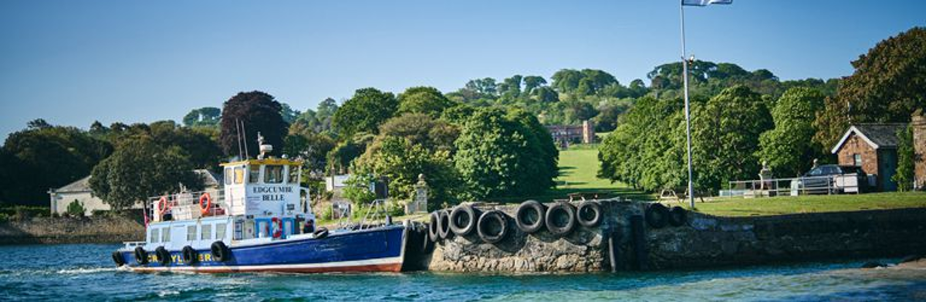
The Cremyll ferry service is mainly served by the Edgcumbe Belle, with the Tamar Belle as back-up. The ferry presently runs (weather and tides permitting) every day of the year, except on Christmas Day. The Edgcumbe Belle was built in 1957 and is the oldest boat in the fleet.
She is constructed of wood, is 17.64 m long and 35 gross tons. All of PBTs’ boats are diesel powered and the Edgcumbe Belle can run at 8 knots across the Tamar from Admiral’s Hard to the Cremyll Quay. She is licensed and, regularly inspected by the Maritime and Coastguard Agency, as are all PBTs boats. The Edgcumbe Belle started life as a British Railways' ferry – the Humphrey Gilbert was built to carry railway passengers from Kingswear Station to Dartmouth Station across the Dart.
(Sir Humphrey Gilbert lived in Greenaway House (now National Trust and associated with Agatha Christie). He was Sir Walter Raleigh’s half-brother and Sir Richard Grenville’s cousin. Very much part of the great Elizabethan West Country seafaring family.)
In 1976, Humphrey Gilbert was sold to the St Mawes Ferry Co., but she never actually left the River Dart and she was bought back by BR, re-engined and then used on the River Thames between Gravesend and Tilbury until 1978, when she was laid up in Newhaven harbour. But not for long, as later that year, she was bought by the Millbrook Steamship and Trading Co. and finally arrived here in Plymouth, to be used primarily on the Drake’s Island run. In 1985, she was back on the River Dart, Kingswear to Dartmouth run for another ten years. For a time, she then ran a ferry service to Greenaway House, by now named the Edgcumbe Belle, and in 2013, she was back in service in the Sound. Such is the life of a well-built wooden boat and, as any boat owner amongst the Beagle’s readers will know, old ladies like the Edgcumbe Belle need a lot of TLC, but the hordes of passengers who cross the Tamar every day clearly like a proper boat with ‘character’.
Scene on the Sound - our weekly round-up of comings and goings
By the Captain (Royal Navy, retired)
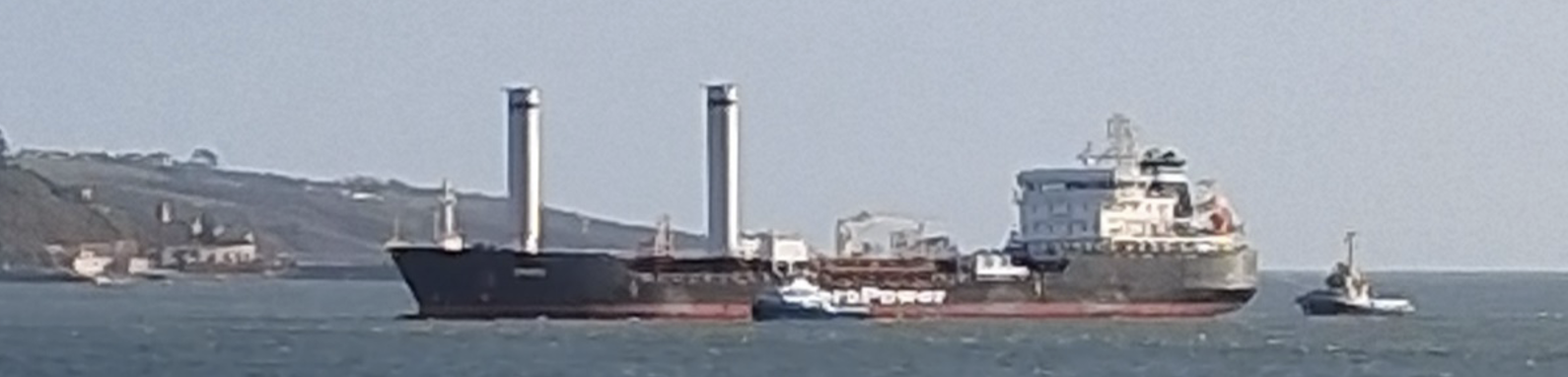
Last Sunday afternoon, an unusual ship crossed the Sound, en route to the Cattewater. The 150m-long tanker MV Shamal (shamal means north in Arabic and is the name given to the regular strong north-westerly wind that blows from Iran across the Gulf to Saudi, Qatar & the Emirates). The two ‘masts’ on the forrard part of her hull are, in fact, Rotor Sails, made by the Norwegian company Norsepower. These two sails can save up to 10% of the ship's annual energy needs, saving around 300 tonnes of fuel and cutting approximately 940 tonnes of CO₂ emissions per annum. Shamal’s owners, Union Maritime, a London-based shipping company have a total of 34 ships with Rotor Sail assisted propulsion in service or on order, so we can expect to see Shamal and her sisters here in the Sound regularly in future. When she sailed on Wednesday, the forward rotor could clearly be seen to be rotating, as it has a large black vertical stripe on it, which could be seen about every 30 seconds.
On the naval front, the MoD have now confirmed that HMS Protector (towed into Devonport on Tue 13th October) has had a ”catastrophic” double engine failure and will not be going South “this year”. Which is probably ‘MoD-speak’ for ‘never again’!
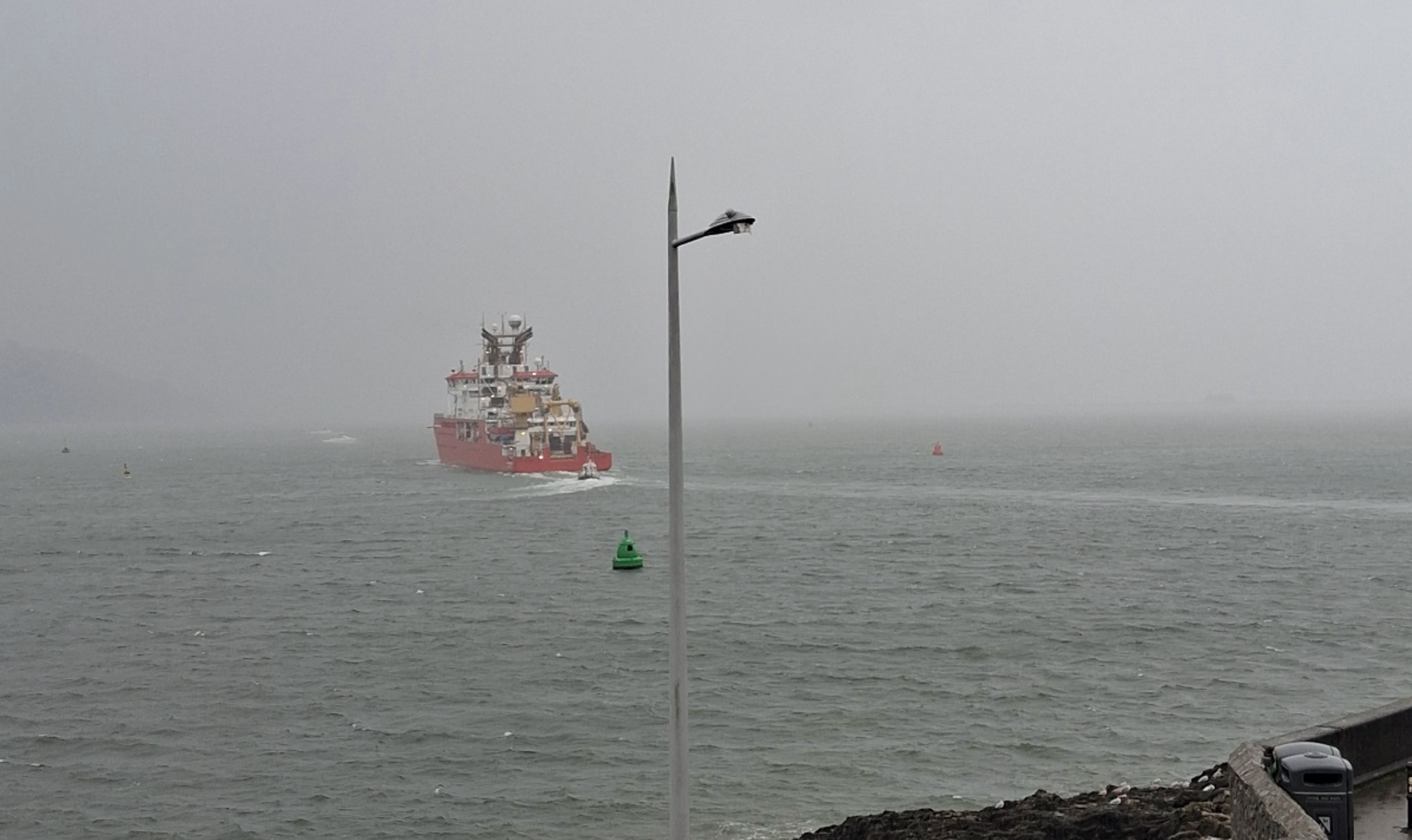
The other red-painted British ship, RRS Sir David Attenborough slipped away into the mist on Saturday morning. I assume that her submersible, Boaty McBoatface, was safely stowed somewhere onboard.
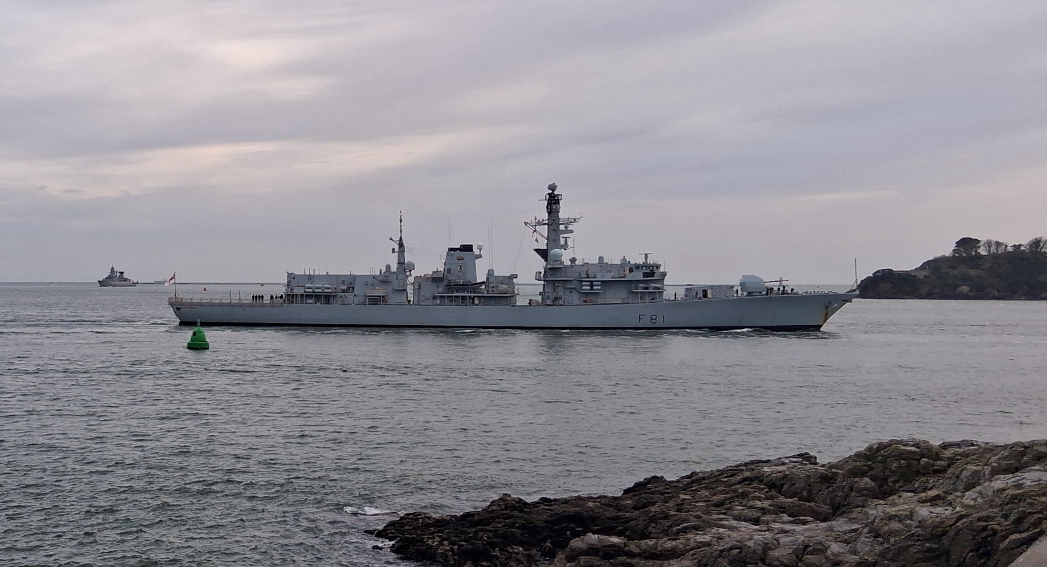
Meanwhile, HMS Sutherland and FGS Hessen have continued their training in the areas. RFA Proteus has also been in and out of the Sound and dockyard.
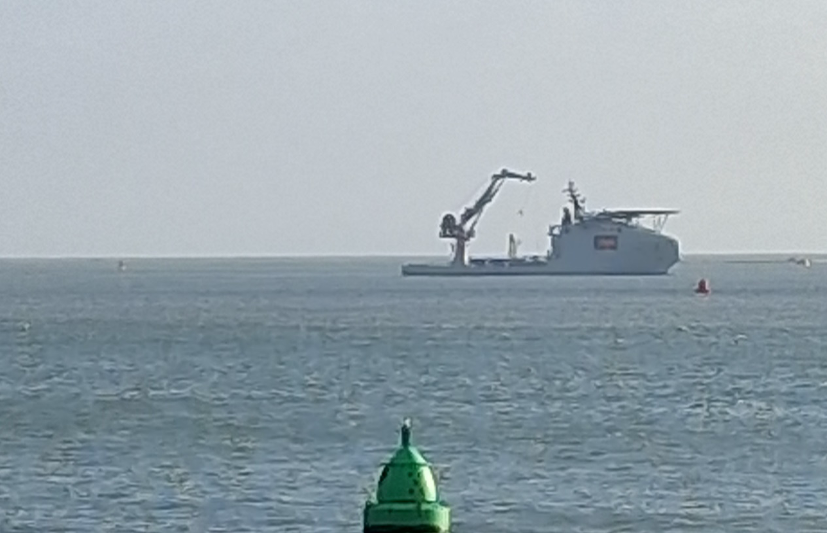
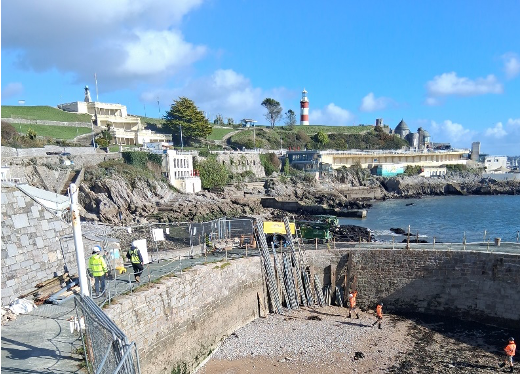
And finally - the West Hoe Harbour saga continues. The eagle-eyed will have seen a large red crane on Tuesday placing a yellow compressor on the pier. This is there for a couple of weeks to power a drilling rig that is taking cores from the whole length of the pier, in order to establish exactly what the inside of the pier is made of. The best guess, at the moment, seems to be ‘rubble infill’ – like most of the Victorian and Edwardian houses on Grand Parade. This means, basically, a mixture of whatever bits of brick and stone were to hand at the time, with a proper skin of stone (or brick and stone in the case of the houses) to hold the core in. As the West Hoe Quarry was in full production when the harbour was being built, it is likely that the bits of rock and stone (the ‘off-cuts’) that weren’t worth exporting formed the core. In parallel, more scaffolding has been removed.
Click here to read The Captain's archive of Scene on the Sound articles
Save the Royal - go inside for an exclusive tour - and plans submitted for work on The Athanaeum

The group trying to save The Royal (Reel) is selling tickets for exlusive tours inside the historic 1930s building.
Expect...
- Lots of the incredible original features in this amazing 1930s building, many of which have been hidden since the 1970s.
- Memories of the hours spent watching films and acts before it closed in 2019
- Find out about the exciting plans for the building which aim to see it brought back into community use through community ownership.
You will not only get to see the inside of what everyone knew as the Reel cinema, but also the enormous space which was formerly a bingo hall and the stalls and stage of the 1938 layout.
It's hoped the future for building will be as a multipurpose facility, with a cinema, a community hub, a live music venue, boutique bed and breakfast rooms, bars (including a rooftop bar) and a cafe.
The tours are on November 10 and November 30, and you can buy tickets and get more information by clicking here
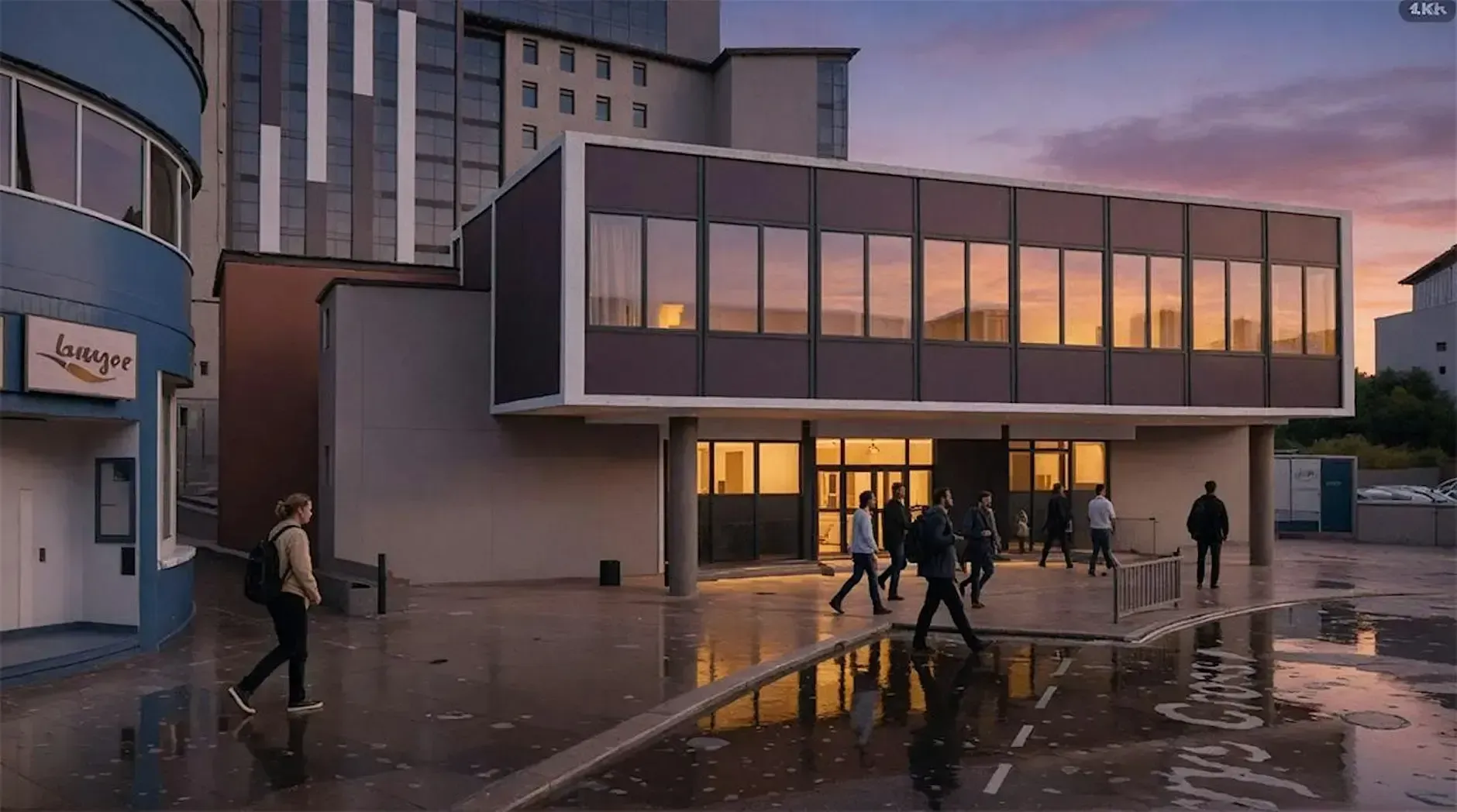
Meanwhile as reported first by The Beagle last July a £2million planned transformation of the Athenaeum building will mean a new mid-size performance space - with an eye on attracting national and international performers, together with restaurants and bars.
Plans have now been submitted to Plymouth Council: your comments and submissions on the proposals should be submitted by November 24, with a decision date pencilled for mid-December.
See the plans on the PCC website: search for 26/01464/FUL
Some things for the weekend

The Proclaimers come to Plymouth
Saturday | Plymouth Arena | 7.30pm
Scottish twins Craig and Charlie Reid bring their distinctive blend of folk, pop and rock to Plymouth. Expect favourites including I’m Gonna Be (500 Miles), Sunshine on Leith and Letter from America, alongside material from their latest album. The duo are renowned for their energetic performances and songs that combine powerful storytelling with irresistible melodies. Tickets
Good Food & Craft Market
Sunday | Royal William Yard | 10am–3pm
One of Plymouth’s favourite waterfront markets returns to the historic Melville Building and courtyard. Browse stalls showcasing local food producers, artisan makers and independent craftspeople, with everything from delicious treats to unusual gifts. Info
Discover the ghosts of the Barbican
Saturday, 5pm–6.30pm; Sunday, 8pm–10pm | Barbican Theatre
The Barbican’s centuries-old streets provide the setting for Barbican Haunts, an atmospheric journey through local legends, strange sightings and stories from Plymouth’s past. Details and tickets
Cat Rose celebrates her debut album
Saturday | Barbican Theatre | 7pm–9pm
Plymouth singer-songwriter Cat Rose marks the release of her debut album, I Know The Dark, with a special full-band headline performance. With a growing national following, she’s an emerging local artist worth discovering. Tickets
Plymouth City Living 'framework' and 'masterplan' - public invited to have say on future of Millbay and Sutton Harbour
The future of Plymouth’s waterfront neighbourhoods, including Millbay, Richmond Walk, Sutton Harbour and Cattedown, is being considered as part of a major new regeneration masterplan.
Plymouth City Council has launched a six-week consultation on proposals that could shape the city’s development over the next 20 to 30 years, including new housing, improved public spaces and better transport connections.
Residents and businesses can have their say online until December 7.
The Beagle will have more on this next week.
Advertisement:


Comments ()